THE 36 KINGS OF BUGANDA
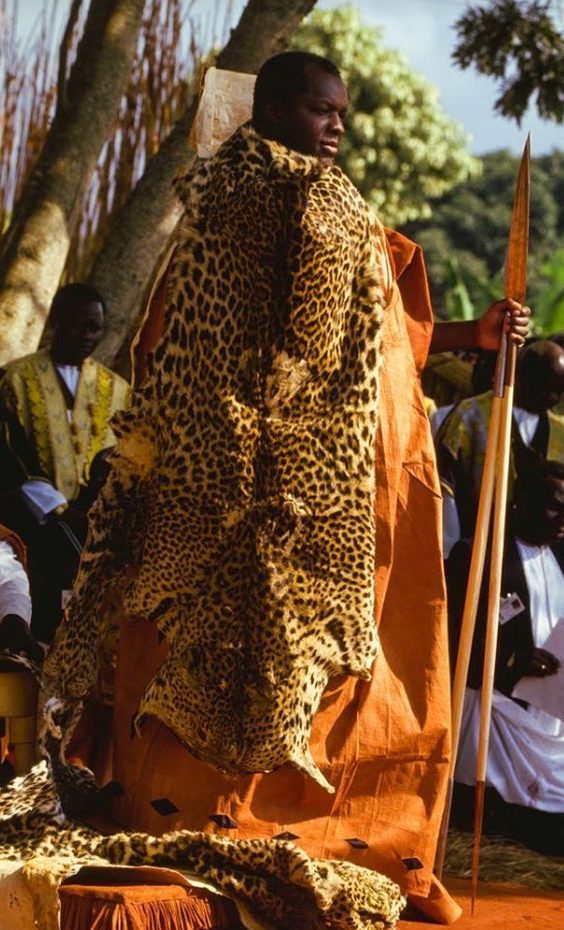
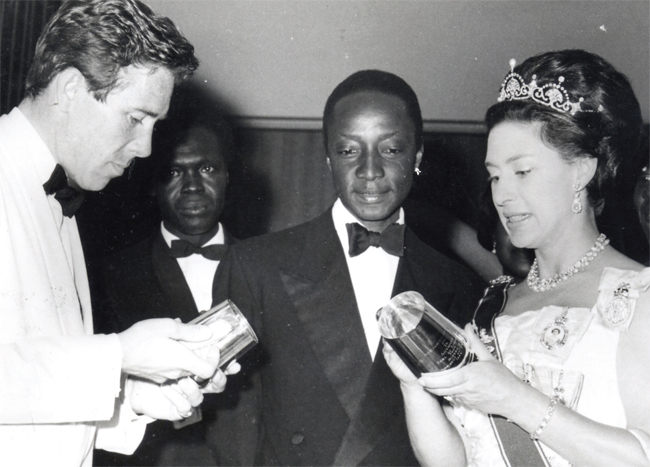
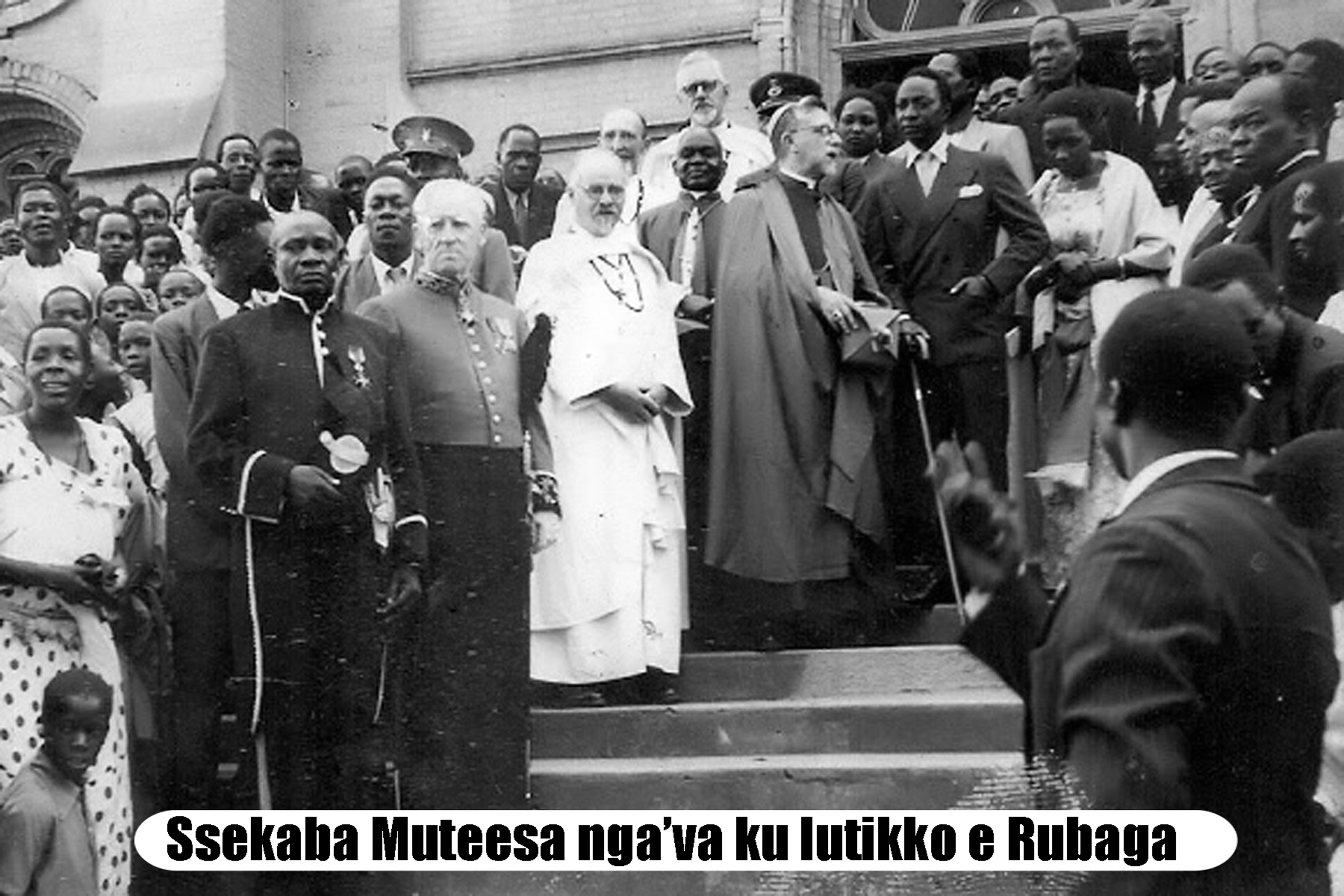
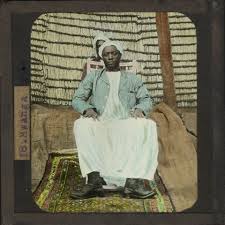
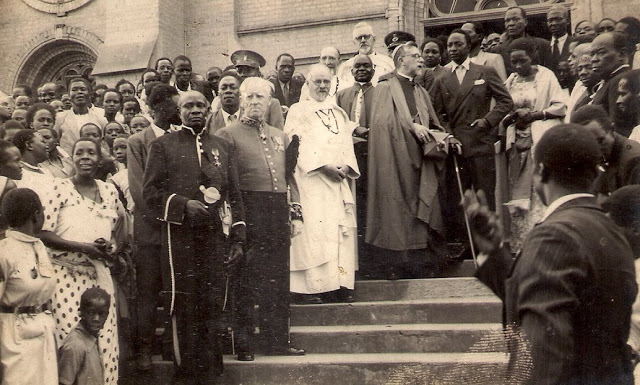
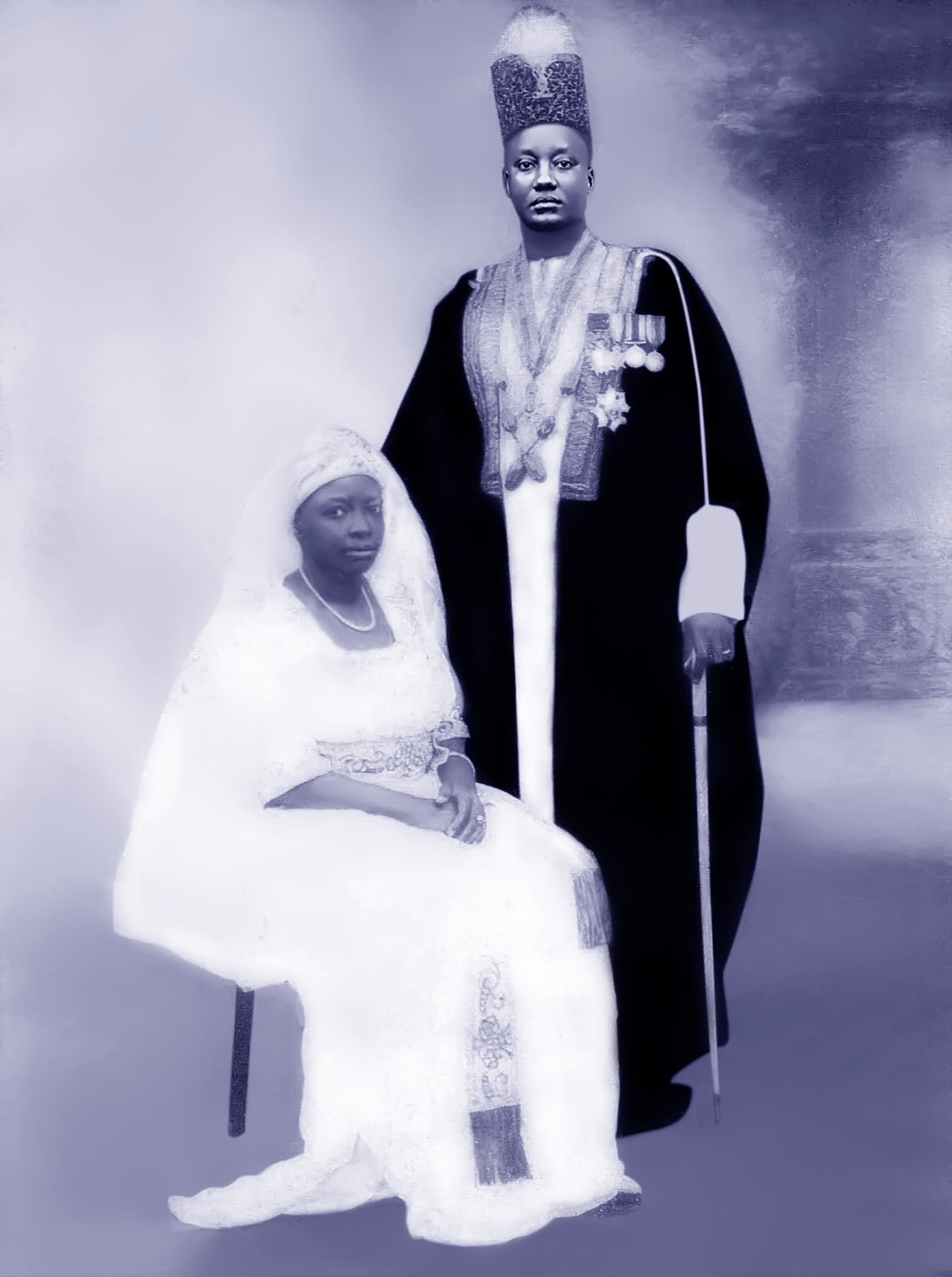
1.KATO Kintu Kakulukuku
He was the first kabaka (king) of the Kingdom of Buganda. “Kintu” is an adopted by-name, chosen for Kintu, the name of the first person on earth in Buganda mythology.
Kato Kintu gave himself the name “Kintu” to associate himself with the “father of all people”, and he may have renamed his wife, from Nantuttululu to Nambi, because that was Kintu’s wife’s name.
Kabaka Kintu abdicated and settled in Magonga. He is said to have disappeared. Up to today, his place of death and burial are unknown. Following his death, there followed a period of Interregnum under the Prime Ministers Walusimbi and his successor, Sebwaana. This period lasted until 1374.
Research:
Kintu was born at Bukasa Village, in the Ssese Islands, on Lake Nalubaale. He established his capital at Nnono, Busujju County. He fathered one child
Kabaka Kato Kintu died at age thirty. He was buried at Nnono, Busujju Count
2. CHWA Nabaka
He reigned during the mid 14th century. He was the 2nd Kabaka of Buganda
He was the son of Kabaka Kato Kintu the first Kabaka of Buganda, who reigned in the early 14th century. His mother was Nambi Nantuttululu, of the Ngeye Clan. He ascended to the throne following the death of his father. He established his capital at Bigo Hill. He married two wives:
- Awabakal Nakku, the Kaddulubaale, daughter of Walusimbi of the Ffumbe clan. After the death of Kabaka Chwa I, she married Sebwaana, a Regent.
- Nakiwala, daughter of Semwanga, of the Ngonge clan.
3.KATO KIMERA
His mother was the lady Nyatworo of the Bakwonga clan. Kato Kimera came from Bukidi with his brother Rukidi Mpuga. He was given Buganda to rule by his brother Rukidi Mpuga, who was then king of Kitara. Kato Kimera rebelled against his brother and declared himself king of Buganda. His tomb is at Lunnyo. The Baganda historians try to distort his real identity. They deny that Bunyoro-Kitara was the first to have a ruling dynasty.
FACTS
Prince (Omulangira) Kalemeera, whose mother was Nakiwala. Kalemeera was driven out of Buganda and forced to seek refuge in Bunyoro, on the orders of his father. In Bunyoro, Kalemeera was accommodated at the court of his uncle, Omukama Winyi I of Bunyoro. There, he had an illicit sexual encounter with Lady Wannyana, daughter of Mugalula Buyonga, a Muhima, the chief wife of his uncle. The affair resulted in a son; one Prince Kimera Walusimbi
4.TTEMBO
He became King of Buganda in succession to Kimera. It is said that he was a mental case and this eventually caused his death. His mother was the lady Nattembo of the Mmamba clan. His tomb lies in Luwoko.
He was the only surviving son of Prince Lumansi, son of Kabaka Kimera. His mother was Nattembo.
He killed his grandfather while on a hunting trip by clubbing him on the head. Accounts of the event differ; some say the event was an accident, while others say it was a deliberate act. Ttembo established his capital at Ntinda Hill.
He fathered three children, two sons and one daughter:
Kabaka Sewannaku Kiggala Mukaabya Kasungubu, the 5th Kabaka of Buganda, who reigned between 1434 and 1464 and between 1484 and 1494.
Prince (Omulangira) Lutimba. He was a full-brother of Kabaka Kiggala. He rebelled against his brother but was defeated by his nephews and fled. He died at Wassozi and was buried at Butugu.
Princess (Omumbejja) Nazibanja. She had several children by her brother Kabaka Kiggala
He died at Busiro and was buried at Katikamu. Other credible sources give his burial place as Bujuuko, Busiro.
5.KIGGALA MUKABYA KUNGUBU
He succeeded his father Ttembo. His mother was the lady Najjemba. We are told that this king reigned for a very long time. His tomb lies in Ddambwe.
He was the eldest son of Kabaka Ttembo Kiridde, Kabaka of Buganda, by his wife, Najjemba. He ascended to the throne upon the death of his father, around 1434. He established his capital at Kitala Hill. In 1464, he abdicated the throne in favor of his son, Ntege Kiyimba. Kiggala resumed the throne after the death of his son, sometime around 1484.
He went blind shortly after the beginning of his second reign. He ruled under the regency of his prime ministers.
He married six wives as detailed below:
Nabukalu, daughter of Natiigo, of the Lugave clan
Nakawuka, daughter of Senfuma, of the Mamba clan
Nakimera, daughter of Masembe, of the Nsenene clan
Nakku, daughter of Walusimbi, of the Ffumbe clan
Nakyobula, daughter of Mbajja, of the Mamba clan
Nawampamba, daughter of Ggunju, of the Butiko clan.
Kabaka Kiggala fathered nine recorded sons:
Prince (Omulangira) Wasswa, whose mother was Princess Nazibanja
Prince (Omulangira) Mawempe, whose mother was Princess Nazibanja
Prince (Omulangira) Semugalwa, whose mother was Princess Nazibanja
Prince (Omulangira) Bubula, whose mother was Princess Nazibanja
Prince (Omulangira) Kaggya, whose mother was Princess Nazibanja
Kabaka Kiyimba Ntege, Kabaka of Buganda, whose mother was Nabukalu
Prince (Omulangira) Gogombe, whose mother was Nakyobula
Prince (Omulangira) Kaasameeme, whose mother was Nakawuka
Prince (Omulangira) Wampamba, whose mother was Nawampamba. He was excluded from the succession for committing incest with his aunt.
Prince Wampamba married two wives (a) Lady Nakayima, daughter of his maternal uncle, Gunju, of the Butiko clan and (b) Lady Naabagereka, aunt and wet nurse to his first wife, sister of Gunju, of the Butiko clan. He fathered two sons:
Kabaka Kayima Sendikaddiwa, the 7th Kabaka of Buganda, whose mother was Nakayima and
Prince (Omulangira) Kyabayinze, whose mother was Naabagereka. Prince Kyabayinze fathered one son:
Prince (Omulangira) Juma who unsuccessfully contested the succession with his cousin, Kabaka Nakibinge.
Kabaka Kiggala Mukaabya Sewannaku Kasungubu died in 1494 of extreme old age and was succeeded on the throne by his grandson, Kayima Sendikaddiwa. His remains are buried at Ddambwe, Busiro.
6.KIYIMBA
He is not really counted among the kings of Buganda because he became king while his father was still alive and died before his father died. His father became king once more. Kiyimba was very much hated by his people because he was a very bad man. His body lies in Ssentema. His mother was the lady Nnabukalu.
7.KAYIMA SENDIKADDIWA
.He was the son of Prince (Omulangira) Wampamba, by his first wife, Lady Nakayima nabbuso. He ascended the throne upon the death of his grandfather, Kiggala Mukaabya in 1494. He established his capital at Nazigo Hill.
He was the first king to lead an attack on Kitara and lost his life in the undertaking when he was fighting against the saza chief of Bwiru [Buddu].
He had two wives:
Nababinge, daughter of Wampona, of the Mamba clan
Naddogo, daughter of Kasujja, of the Ngeye clan
He fathered two sons:
Kabaka Nakibinge Kagali, whose mother was Nababinge
Prince (Omulangira) Kabasanda, whose mother was Naddogo
He was killed in battle against Chief Bwakamba of Nyendo, at Sunga, in 1524.
He is buried at Nabulagala, Busiro.He died in Isunga during the reign of Winyi. His body lies in Kkongoije.
8.NNAKIBINGE KAGALI
He succeeded Kabaka Kaima, his father. He was the son of Nnakibinge. He is mostly remembered for his bravery.
He was the eldest son of Kabaka Kayima Sendikaddiwa, the seventh Kabaka of Buganda, who reigned from 1494 until 1524.
Kabaka Nakibinge ascended the throne upon the death of his father in 1524.
He established his capital at Bumbu Hill.During his reign, Nakibinge launched attacks on Bulemezi, which roused the attention of the Omukama of Bunyoro.
In the ensuing years, the war raged on, and the heavy attacks of the Banyoro forced Nakibinge to seek military aid from the Islands of Ssesse. However, this boost in military force only guaranteed victory for a brief moment for Nakibinge.
Despite penetrating further into Bunyoro territory, the Banyoro regrouped and drove Nakibinge’s army from Bunyoro. The Banyoro chased his troops through Bulemezi, Kyaddondo and Mawokota.
He was killed by Olimi I, the Omukama of Bunyoro-Kitara. Omukama Olimi I wanted to reconquer Buganda but he was advised against his undertaking because it was not god for one kingdom to swallow another.
He therefore gave up idea. The Baganda put his wife Nnannono on the throne.
Nnannono was pregnant at the time and it was hoped that the child she bore would become king. But she was, however unfortunate because she had a baby girl and not a boy.
He married eight wives:
Nabitaba, daughter of Ndugwa, of the Lugave clan
Najjemba, daughter of Semwanga, of the Ngonge clan
Nalunga, daughter of Lusundo, of the Nvuma clan
Nabakyaala Namulondo, the Naabagareka, sister of Gunju, of the Butiko clan
Nasuuna, daughter of Nankere, of the Mamba clan
Bukirwa, the Nanzigu, daughter of Sekayiba, of the Mbogo clan
Nannono, daughter of Seggirinya, of the Ngo clan. Nannono acted as regent after the death of her husband for a period of eighteen months
Kabejja
He fathered four sons and two daughters:
Kabaka Mulondo Sekajja, Kabaka of Buganda, whose mother was Namulondo
Kabaka Jemba Busungwe, Kabaka of Buganda, whose mother was Najjemba
Kabaka Suuna I Kisolo, Kabaka of Buganda, whose mother was Nassuuna
Prince (Omulangira) Nzigu, whose mother was Bukirwa
Princess (Omumbejja) Batenga, whose mother was Namulondo
Princess (Omumbejja) Nnono, whose mother was Nannono. Born posthumously in 1555. She died young.
Kabaka Nakibinge was killed in battle against the Banyoro, at Busajja, in 1554. He is buried at Kongojje, Busiro.
Nakibinge’s death signals the end of the “Babito” dynasty in Buganda, and heralded a new era.
“The immediate and perhaps most important result of Nakibinge’s death was that it seems to have ended the previous dynasty and thereby created a succession crisis for Buganda. The sources for this period, however, have perhaps as many variants as those of other regions put together. The reason for this is probably that a new dynasty was introduced and also that Nakibinge himself was regarded by the Baganda as a national hero. Hence the multiplicity of traditions which tend to contradict each other.”
9. Ssekabaka Mulondo Sekajja
He succeeded his father Nnakibinge and became King of Buganda while a baby.Mulondo Sekajja was Kabaka of the Kingdom of Buganda between 1555 and 1564.
He was the 9th Kabaka of Buganda. His mother was the lady Namulondo. He lived to a ripe age.
The royal chair of Buganda started to be called Nnamulondo [after his mother] during the reign of Kabaka Mulondo. His tomb is found in Mitwebiri.
He was the eldest surviving son of Kabaka Nakibinge Kagali, Kabaka of Buganda, who reigned between 1524 and 1554.
His mother was Nabakyaala Namulondo, the fourth wife of his father and the Naabagereka.
He was elected to succeed his father, upon his father’s death and after the regency of his step-mother expired on the birth of her daughter in 1555. He established his capital at Mitw’ebiri Hill.
Historian Semakula Kiwanuka asserts that the reign of Mulondo might be an indication of the beginning of a new dynasty.
“But the circumstances which led to Nakibinge’s death and those which surrounded the accession of Mulondo render some of our sources suspicious.
For instance, the claim that Mulondo came to the throne as an infant seems to be contradicted by a close analysis of the sources.
This analysis strongly suggests that Mulondo and his immediate successors came from Sese.”
During his reign, Mulondo led several raids against Buddu, which was then still part of the Bunyoro-Kitara kingdom.
He married as his only wife, Nakku, daughter of Naserenga, of the Ffumbe clan.
He fathered three sons, by his wife, Nakku of the Ffumbe clan:
Prince (Omulangira) Kazibwe
Prince (Omulangira) Walugembe
Kabaka Sekamaanya Kisolo, Kabaka of Buganda
He died at the Kiryokyembi Palace, in Mitw’ebiri. He is buried at Gombe, in Bulemeezi County.
Other credible sources place his burial place at Bulondo Busiro.
10.JJEMBA BUSUNGWE
Jemba Busungwe (died 1584) was Kabaka (king) of the Kingdom of Buganda between 1564 and 1584. He was the 10th Kabaka of Buganda.
This king succeeded his elder brother, Mulondo.
He was the son of Kabaka Nakibinge Kagali, Kabaka of Buganda, between 1524 and 1554.
His mother was Najjemba, the 2nd wife of his father. He ascended to the throne upon the death of his elder half-brother.
He established his capital at Bubango Hill, in what became Busiro Country, in modern-day Wakiso District.
He did not reign long because he had come to the throne while already an old man. His body lies in Mubango.
He had three wives:
Nabbanja, daughter of Kayiira, of the Mbogo clan
Nakkazi, daughter of Gabunga, of the Mamba clan
Nanfuka, daughter of Kasujja, of the Ngeye clan
He fathered four sons:
Prince (Omulangira) Kawaali, whose mother was Nabbanja
Prince (Omulangira) Lulume, whose mother was Nabbanja
Prince (Omulangira) Gogombe, whose mother was Nakkazi
Prince (Omulangira) Zigulu, whose mother was Nanfuka.
He died at the Bagambamunyoro Palace, Bubango, Busiro County, in 1584.
He was buried at Gombe, in Bulemeezi County, Other credible sources place his burial place at Bubango, Busiro
11.SSUNA 1 KISOLO
Suuna I Kisolo, was Kabaka (King) of the Kingdom of Buganda, reigning from about 1584 until his death around 1614. He was the 11th Kabaka of Buganda.
He was the son of Kabaka Nakibinge Kagali, Kabaka of Buganda between 1524 and 1554.
His mother was Nassuuna, his father’s fifth wife. He took the throne after the death of his elder half-brother, Kabaka Jemba, in 1584. He established his capital at Gimbo Hill.
He married two wives:
Nakigo, daughter of Walusimbi, of the Ffumbe clan
Naluggwa, daughter of Lwoomwa, of the Ndiga clan
He fathered four sons:
Prince (Omulangira) Sewatti, whose mother was Nakigo
Prince (Omulangira) Gogombe
Prince (Omulangira) Kawaali
Kabaka Kimbugwe Kamegere, Kabaka of Buganda, whose mother was Naluggwa.
He died in middle-age, at his capital at Gimbo, Busiro in 1614. He was buried at Gimbo
He came to the throne while already a very old man. Ssuna I did not reign for long because of old age.
12.SSEKAMANYA KISOLO
Sekamaanya Kisolo, was Kabaka of the Kingdom of Buganda between 1614 and 1634. He was the twelfth Kabaka of Buganda.
He was the youngest son of Kabaka Mulondo Sekajja, Kabaka of Buganda. His mother was Nakku of the Ffumbe clan, the only wife his father married.
He ascended to the throne upon the death of his uncle, Suuna I, in 1614. He established his capital at Kongojje hill.
He married one wife, one Nabakyaala Nabuuso, daughter of Gunju of the Butiko clan.
Kabaka Sekamaanya was the father of Kabaka Kateregga Kamegere, the fourteenth Kabaka of Buganda, who was his only son.
He did not reign for long. His body lies in Kkongoije.
13.KIMBUGWE
Kimbugwe Kamegere was Kabaka of the Kingdom of Buganda between 1634 and 1644. He was the thirteenth Kabaka of Buganda.
He was born at Kongojje, the youngest son of Suuna I Kisolo, Kabaka of Buganda between 1584 and 1614. His mother was Naluggwa of the Ndiga clan, the second wife of his father.
He ascended to the throne after the death of his cousin, Kabaka Sekamaanya Kisolo. He established his capital at Bugwaanya
He became king in succession to his elder brother, Ssekamanya. He was also a son of Ssuna I. His mother was the lady Nnalugwa. Kimbugwe also did not reign for long. He died soon after being poisoned by Kateregga, his young brother.
He had three wives:
Nakamyuuka, daughter of Mukusu, of the Mpindi clan
Nakunja, daughter of Sekayiba, of the Mbogo clan
Nabakyaala Nabuuso, the Naabagareka, daughter of Gunju, of the Butiko clan and widow of his predecessor, Kabaka Sekamaanya Kisolo, Kabaka of Buganda, who ruled between 1614 and 1634
He fathered two sons:
Prince (Omulangira) Kamyuuka, whose mother was Nakamyuuka
Prince (Omulangira) Baleke, whose mother was Nakamyuuka
He was the one who captured the county of Kaima from Kitara and gave to Omulangira Mpandwa.
He was killed, allegedly by witchcraft by his stepson, Prince Kateregga, who succeeded him to the throne, circa 1644.
He is buried at Bugwaanya, Busiro.
14.KATEREGGA KAMEGERE
Kateregga Kamegere was Kabaka of the Kingdom of Buganda between 1644 and 1674. He was the fourteenth (14th) Kabaka of Buganda
He was the only son of Kabaka Sekamaanya Kisolo, Kabaka of Buganda, who reigned between 1614 and 1634.
His mother was Nabakyaala Nabuuso, the Naabagareka, his father’s only wife. He ascended to the throne following the death of his stepfather, allegedly, after killing him by witchcraft around 1644.
During the reign of Kimbugwe, Prince Kateregga had twin sons.
Whilst performing the birth ceremonies in the presence of the Kabaka, Kateregga was accompanied by a different wife instead of the mother of the twins, because the latter was lame.
Kimbugwe’s inquiry about the absence of the twins’ mother angered Kateregga, who stormed out midway the ceremony.
Kateregga declared war on Kabaka Kimbugwe, in which he usurped the throne from his cousin.
He established his capital at Lugeye Hill.
Kateregga is noted for his violent character, and the persecutions he carried out against the Ngo (leopard) clan for their claims to have royal links. Members of the clan found themselves migrating, joining other clans or founding separate clans in order to hide their identity.
ACHIEVEMENT
To Buganda’s territory, Kateregga added Butambala and Gomba through conquest. He installed his own chiefs in these regions as well is in south Singo.
His appointment of royal favourites to administrative positions in the provinces reflects a move away from the indirect rule of clan heads and hereditary chiefs towards more direct rule by the monarchy
He married nine (9) wives:
Nakabugo, daughter of Mugema, of the Nkima clan
Nakamu, daughter of Kinyolo, of the Nkima clan
Nakinyago, daughter of Naserenga, of the Ffumbe clan
Naalongo Kawenyera, sister of Nakabugo, and daughter of Mugema, of the Nkima clan
Naluggwa, daughter of Lwoomwa, of the Ndiga clan
Namayumba, daughter of Mugema, of the Nkima clan
Namugayi, daughter of Mpinga, of the Lugave clan
Namutebi, daughter of Mbaja, of the Mamba clan.
Nanzigu, daughter of Sekayiba, of the Mbogo clan
He fathered fifteen (15) children:
Prince (Omulangira) Lumansi Kijojo, whose mother was Nakabugo
Prince (Omulangira) Naluwembe, whose mother was Nakamu
Prince (Omulangira) Kinyago, whose mother was Nakinyago
Prince (Omulangira) Waswa, whose mother was Naalongo Kawenyera. (Born before 1644 with twin brother Kato)
Prince (Omulangira) Kato, whose mother was Naalongo Kawenyera. (Born before 1644 with twin brother Waswa)
Prince (Omulangira) Senninde, whose mother was Naluggwa
Prince (Omulangira) Gaweserwa, whose mother was Naluggwa
Prince (Omulangira) Kawuuwa, whose mother was Namayumba
Prince (Omulangira) Kawagga, whose mother was Namugayi
Prince (Omulangira) Kazibwe Katakessu, whose mother was Namugayi
Kabaka Mutebi I, Kabaka of Buganda from 1674 until 1680, whose mother was Namutebi
Kabaka Juuko Mulwaana, Kabaka of Buganda, between 1680 and 1690, whose mother was Namutebi
Kabaka Kayemba Kisiki, Kabaka of Buganda, between 1690 and 1704, whose mother was Namutebi
Prince (Omulangira) Nzigu, whose mother was Nanzigu
Princess (Omumbejja) Nazibanja, whose mother was Naluggwa.
He died from a millipede sting to his genitals in 1674. He was buried at Mitw’ebiri.
Other credible sources put his burial place at Buteregga, Busiro.
He was the man who began the process of seizing areas of Kitara and adding them to Buganda. He captured Butambala County and gave it to Kawewo. This happened in the reign of Winyi II.
15.MUTEBI 1
Mutebi I was Kabaka of the Kingdom of Buganda between 1674 and 1680. He was the fifteenth (15th) Kabaka of Buganda.
He was the son of Kabaka Kateregga Kamegere, Kabaka of Buganda, who reigned between 1644 and 1674. His mother was Namutebi of the Mamba clan, the eighth (8th) wife of his father. He ascended the throne following the death of his father in 1674. He established his capital at Muguluka.
He married five (5) wives:
Nabitalo, daughter of Walusimbi, of the Ffumbe clan
Nabukalu, daughter of Ndugwa, of the Lugave clan
Naluyima, daughter of Nakatanza, of the Lugave clan
Namawuba, daughter of Natiigo, of the Lugave clan
Nampiima, daughter of Kibale, of the Mpeewo clan.
He fathered seven (7) sons:
Prince (Omulangira) Lukenge, whose mother was Nabitalo
Kabaka Tebandeke Mujambula, Kabaka of Buganda, who reigned between 1704 and 1724, whose mother was Nabukalu
Prince (Omulangira) Mpiima, whose mother was Nampiima
Prince (Omulangira) Kayima, whose mother was Naluyima
Prince (Omulangira) Mawuba, whose mother was Namawuba
Prince (Omulangira) Mukama, whose mother was Namawuba
Prince (Omulangira) Matumbwe, whose mother was Namawuba
He died at Mbalwa and was buried there.
Other credible sources put his burial place at Kongojje, Busiro.
16.JJUKO MULWAANA
Juuko Mulwaana was Kabaka of the Kingdom of Buganda, between 1680 and 1690. He was the sixteenth (16th) Kabaka of Buganda.
He was the second son of Kabaka Kateregga Kamegere, Kabaka of Buganda between 1644 and 1674. His mother was Namutebi of the Mamba clan, the eighth (8th) wife of his father. He ascended the throne upon the demise of his elder brother around 1680. He established his capital at Ngalamye.
He married six (6) wives:
Nabatanzi, daughter of Sebugulu, of the Lugave clan
Nakimera, daughter of Kalanzi, of the Nsenene clan
Nakisozi, daughter of Sekayiba, of the Mbogo clan
Nalunga, daughter of Semaluulu, of the Nvuma clan
Nandawula Kabengano, daughter of Nkata, of the Nsenene clan
Nantume, daughter of Sekayiba, of the Mbogo clan
He fathered many children including:
Prince (Omulangira) Batanzi, whose mother was Nabatanzi
Prince (Omulangira) Kimera, whose mother was Nakimera
Prince (Omulangira) Kisozi, whose mother was Nakisozi
Prince (Omulangira) Lumweeno, whose mother was Nalunga
Kabaka Ndawula Nsobya, Kabaka of Buganda, who reigned between 1724 and 1734, whose mother was Nandawula Kabengano
Prince (Omulangira) Kasagazi, whose mother was Nantume
Prince (Omulangira) Kyekaka.
Princess (Omumbejja) Kagere
He died around 1690. No information is available as to the place or cause of his death.
He is buried at Bujuuko, Busiro.
He had commissioned his young brother Kayemba to conquer Buvuma which was also added to the kingdom of Buganda.
17.KAYEMBA KISIKI
He was also a son of Kateregga.
Kayemba Kisiki was Kabaka of the Kingdom of Buganda between 1690 and 1704. He was the seventeenth (17th) Kabaka of Buganda.
He was the third son of Kabaka Kateregga Kamegere, Kabaka of Buganda, who reigned between 1644 and 1674. His mother was Namutebi of the Mamba clan, who was the eighth (8th) of his father’s nine wives.
He ascended the throne upon the death of his elder brother. He established his capital at Lunnyo. Lunnyo is located near the city of Entebbe, close to where the current Uganda State House stands today.
He married three wives:
Nabbanja, daughter of Kasujja, of the Ngeye clan
Nakku, daughter of Walusimbi, of the Ffumbe clan
He fathered three sons:
Prince (Omulangira) Sematimba, whose mother was Nabbanja
Prince (Omulangira) Wakayima, whose mother was Nabbanja
Prince (Omulangira) Kawumpuli, whose mother was Nakku. He was born limbless and consequently excluded from the succession.
Kabaka Kayemba died at an advanced age around 1704. He is buried at Nabulagala, Busiro.
18.TEBANDEKE
Tebandeke Mujambula, was Kabaka of the Kingdom of Buganda between 1704 and 1724. He was the eighteenth (18th) Kabaka of Buganda.
He was the second son of Kabaka Mutebi I, Kabaka of Buganda, who reigned between 1674 and 1680. His mother was Nabukalu of the Lugave clan, the second (2nd) of his father’s five (5) wives. He ascended to the throne after the death of his uncle, around 1704. He established his capital at Bundeke.
During his reign, Tebandeke’s children were faced with a severe illness and he sent for oracles to establish the cause of the malady.
The oracles prescribed a ritual, which the Kabaka performed and the children survived. For this, the oracles demanded a high price for their services and shamed Tebandeke with public demands for their payment.
The mortified Kabaka had the oracles put to death and their temples burned down. The Kabaka however was driven mad and ran into the forest.
He married five (5) wives:
Naabakyaala Nakyaazirana, Kaddulubaale, daughter of Sensalire, of the Njovu clan
Balangazza, daughter of Sekayiba, of the Mbogo clan
Nabali, daughter of Sempala, of the Ffumbe clan
Nabaziika, sister of Nakuwanda, and daughter of Mugema, of the Nkima clan
Nakuwande, sister of Nabazika, and daughter of Mugema, of the Nkima clan
He is recorded to have fathered only one child:
Prince (Omulangira) Juma Katebe, whose mother was Nakyaazirana. He was excluded from the succession by Kabaka Ndawula Nsobya.
Kabaka Tebandeke died at the Kanyakasasa Palace, Bundeke. He was buried at Bundeke
19.NDAWULA NSOBYA
Ndawula Nsobya was Kabaka of the Kingdom of Buganda between 1724 and 1734. He was the nineteenth (19th) Kabaka of Buganda.
He was the fifth son of Kabaka Juuko Mulwaana, Kabaka of Buganda, who reigned between 1680 and 1690. His mother was Nandawula Kabengano of the Nsenene clan, the fifth of his father’s six wives. He ascended to the throne upon the death of his cousin. He established his capital at Lubaga.
He is reported to have married seven (7) wives:
Nabisubi, daughter of Namenyeka of the Mamba clan
Naggujja, daughter of Mukalo, of the Njovu clan
Nakikulwe Namirembe, daughter of Kayindi
Nakidde Luyiga, daughter of Segiriinya, of the Ngo clan
Nakyomubi, daughter of Gabunga, of the Mamba clan.
Nampanga, daughter of Gunju, of the Butiko clan
Nazzaluno, daughter of Walusimbi, of the Ffumbe clan
Kabaka Ndawula is reported to have fathered ten (10) children; eight (8) sons and two (2) daughters:
Kabaka Kagulu Tebukywereke Ntambi, Kabaka of Buganda, who reigned between 1734 and 1744, whose mother was Naggujja
Prince (Omulangira) Musanje Golooba, whose mother was Nakidde Luyiga.
Prince Musanje Golooba married three wives: (a) Bawuna, daughter of Magunda, of the Ffumbe clan (b) Nabulya Naluggwa, daughter of Lutalo, of the Ndiga clan and (c) Namirembe, daughter of Sematengo, of the Ndiga clan. He fathered four (4) sons: (a) Kabaka Mwanga I Sebanakitta, Kabaka of Buganda, who reigned between 1740 and 1741, whose mother was Nabulya Naluggwa (b) Kabaka Namuggala Kagali, Kabaka of Buganda, who reigned between 1741 and 1750, whose mother was Nabulya Naluggwa (c) Kabaka Kyabaggu Kabinuli, Kabaka of Buganda, who reigned between 1750 and 1780, whose mother was Nabulya Naluggwa and (d) Prince (Omulangira) Kayondo, whose mother was Namirembe. Prince Musanje Golooba was executed on the orders of his half-brother Kabaka Kagulu Tebukywereke for the murder of Prince (Omulangira) Luyenje.
Kabaka Mawanda Sebanakitta, Kabaka of Buganda, who ruled between 1738 and 1740, whose mother was Nakidde Luyiga
Kabaka Kikulwe Mawuba, Kabaka of Buganda, who reigned between 1736 and 1738, whose mother was Nakikulwe
Prince (Omulangira) Segaamwenge
Prince (Omulangira) Luyenje. He was killed by his half-brother, Prince Musanje.
Prince (Omulangira) Ndege, whose mother was Nakidde Luyiga
Prince (Omulangira) Bezzaluno, whose mother was Nazzaluno
Princess (Omumbejja) Ndege, Nassolo.
Princess (Omumbejja) Kyomubi, whose mother was Nakyomubi
Kabaka Ndawula died of old age around 1734, at the Kasajjakaliwano Palace, at Lubaga. He is buried at Musaba, Busiro.[
He had succeeded his cousin, Tebandeke. Ndawula was the son of Jjuko. He is mostly remembered for his peaceful reign.
20.KAGULU-TIBUCWEREKE
This king succeeded his father, Ndawula. Kagulu Ntambi Tebukywereke was Kabaka of the Kingdom of Buganda, between 1734 and 1736. He was the twentieth (20th) Kabaka of Buganda.
He was the eldest son of Kabaka Ndawula Nsobya, Kabaka of Buganda between 1724 and 1734. His mother was Naggujja of the Njovu clan, the second (2nd) of his father’s seven (7) wives. He ascended to the throne upon the death of his father. He established his capital at Bulizo.
He married one wife, who bore him two sons.
Prince (Omulangira) Kayima Ssekindi
Prince (Omulangira) Sematimba. Prince Sematimba had a son; Prince (Omulangira) Kayemba Sekitamu. Prince Sekitamu, in turn had two sons: (a) Prince (Omulangira) Lubugu and (b) Prince (Omulangira) Sekitamu. He had a son: (A) Prince (Omulangira) Name Unknown. The unknown prince in turn had a son: Prince (Omulangira) Kikindu. Prince Kakindu died before 1939, having had a son; Prince (Omulangira) Isaaka Yali-Aseka
He is said to have been man of difficult nature. He ordered all his people to kneel on knives [with sharp ends] when they came to greet him. But the people rebelled against him.
Kabaka Kagulu Tebukywereke was deposed by his sister, Princess Ndege, the Nassolo. He fled to Buto. He was killed by drowning in Lake Nalubaale, on the orders of Nassolo. His body was retrieved and buried at Bbuga, Busiro
He was not given a royal burial like other kings because of is evil character.
21.KIKULWE MAWUBA
Kikulwe Mawuba was Kabaka of the Kingdom of Buganda between 1736 and 1738. He was the twenty first (21st) Kabaka of Buganda,His mother was the lady Nnamirembe.
He was the fourth (4th) son of Kabaka Ndawula Nsobya, the nineteenth (19th) Kabaka of Buganda. His mother was Nakikulwe Namirembe, the third (3rd) of his father’s seven (7) wives.
He ascended the throne after the death of his elder brother, Kabaka Kagulu Tebukywereke. He established his capital at Kibibi
He is reported to have married five (5) wives:
Nabiddo, daughter of Luba, of the Nyonyi clan
Najjuka, daughter of Gunju, of the Butiko clan
Nakabugo, daughter of Mugema, of the Nkima clan
Namatovu, daughter of Kajubi, of the Nsenene clan
Naabakyaala Nantume Nanzigu, daughter of Sekayiba, of the Mbogo clan
He is recorded to have fathered at least nine children:
Prince (Omulangira) Madangu, whose mother was Nakabugo
Prince (Omulangira) Mpalikitenda, whose mother was Nabiddo
Prince (Omulangira) Maganda, whose mother was Nakabugo
Prince (Omulangira) Gabanga, whose mother was Nakabugo
Prince (Omulangira) Segaamweenge, whose mother was Nakabugo
Princess (Omumbejja) Zansanze, whose mother was Nakabugo
Princess (Omumbejja) Nabaloga, whose mother was Nakabugo
Prince (Omulangira) Gabane, whose mother was Namatovu
Prince (Omulangira) Gomottoka, whose mother was Namatovu
Kabaka Kikulwe was murdered by his elder half-brother, Prince Mawanda Sebanakitta, who seized the throne around 1738. Ssekabaka Kikulwe is buried at Kaliiti, Busiro.
22.MAWANDA SEBANAKITA
Mawanda Sebanakitta was Kabaka (King) of the Kingdom of Buganda, between 1738 and 1740. He was the twenty second (22nd) Kabaka of Buganda.
He succeeded his elder brother, Kikulwe. He was also a son of Ndawula. He was the one who conquered the Basoga and it was during his reign that Busoga first became a colony of Buganda. His mother was the lady Nnakidde.
He was the third son of Kabaka Ndawula Nsobya, the 19th Kabaka of Buganda. His mother was Nakidde Luyiga of the Ngo clan, the fourth (4th) of his father’s seven (7) wives. Mawanda killed his brother Kabaka Kikulwe Mawuba and seized the throne around 1738. He established his capital at Katakala.
He is recorded to have married seven (7) wives:
Naabakyaala Kikome, the Kaddulubaale, daughter of Gabunga, of the Mamba clan
Naabakyaala Nabunnya Nassaza, daughter of Masembe, of the Nsenene clan
Nabuuso, daughter of Gunju, of the Butiko clan.
Nakasinde, daughter of Namwaama, of the Kkobe clan
Namisango, daughter of Sebugwaawo, of the Musu clan
Nang’onzi, daughter of Mbaziira, of the Nnyonyi clan
Nankonyo, daughter of Kagenda, of the Mamba clan
His children included the following:
Prince (Omulangira) Mulere, whose mother was Nabunnya. He rebelled against Kabaka Kyabaggu but was defeated and captured. He was killed by being burned alive at Buyinja.
Prince (Omulangira) Bbengo, whose mother was Kikome. He rebelled against Kabaka Kyabaggu but was defeated and captured. He was killed by being burned alive at Bbuye.
Prince (Omulangira) Waswa, whose mother was Nakasinde. He was a twin with Nakato.
Prince (Omulangira) Kirabe, whose mother was Nang’onzi.
Princess (Omumbejja) Nakato, whose mother was Nakasinde. She was a twin with Waswa.
Princess (Omumbejja) Namirembe, whose mother was Nankonyo.
A Group of princes in the royal court conspired to murder Kabaka Mawanda in 1740. The group included Prince Mwanga Sebanakitta, who ascended the throne after Kabaka Mawanda’s demise. Kabaka Mawanda was buried at Meerera at first, but was exhumed in 1864 and re-buried at Serinnya
He was the Kabaka who cut off Kyaggwe from Kitara and made it part of Buganda. This happened during the reign of Kyebambe II.
23. MWANGA I SEBANAKITA
He succeeded his uncle Mawanda. He was a son of prince Musanje, the young brother of Mawanda. Musanje and Mawanda had one mother-Nnakidde.
Mwanga I Sebanakitta was Kabaka of the Kingdom of Buganda from 1740 until 1741. He was the twenty third (23rd) Kabaka of Buganda.
He is recorded to have married five (5) wives:
Najjuma, daughter of Natiigo, of the Lugave clan
Nakabugo, daughter of Mugema, of the Nkima clan
Naabakyaala Nakiwala, Omubikka, daughter of Semwanga, of the Ngonge clan
Nalubowa, daughter of Segiriinya, of the Ngo clan
Namakula, daughter of Mpinga, of the Lugave clan
He is recorded to have fathered three (3) sons:
Prince (Omulangira) Mulage, whose mother was Najjuma. He became Sabaddu to the princesses.
Prince (Omulangira) Kiwanuka, whose mother was Nakabugo
Prince (Omulangira) Nkondoggo, whose mother was Namakula
Kabaka Mwanga I Sebanakitta was killed by Nkunnumbi, in revenge for the murder of his son, around 1741. He was initially buried at Meerera. In 1860, his remains were exhumed and re-buried at Kavumba, Busiro.[2] He was succeeded by his brother, Prince Namuggala Kagali.
Mwanga I is not really counted among the lists of the Kabakas of Buganda, because he only spent nine days on the throne.
24.NNAMUGALA KAGALI
He succeeded his elder brother, Mwanga I, with whom he had the same mother-Nnalugwa.
Namuggala Kagali was Kabaka of the Kingdom of Buganda, between 1741 and 1750. He was the twenty-fourth (24th) Kabaka of Buganda.
He was the second son of Prince Musanje Golooba. His mother was Nabulya Naluggwa of the Ndiga clan, the second of his father’s wives. He ascended to the throne upon the death of his elder brother, Kabaka Mwanga I Sebanakitta, in 1741. He established his capital at Nansana.
He is said to have been a drunkard. He is said also to have been the first king to start the ceremony of the succession rite which takes place on the Budo hill [like that of Kitara which takes place on the hill of Buru]. Kabaka Nnamugala did not die a king, having been dethroned by his younger brother, Kyabaggu.
He is recorded to have married six (6) wives:
Naabakyaala Basuuta, the Kaddulubaale, daughter Masembe, of the Nsenene clan
Najjuka, daughter of Gunju, of the Butiko clan
Nakangu, daughter of Kagenda, of the Mamba clan
Nalubowa, daughter of Seggiriinya, of the Ngo (Leopard) clan.
Nalunga, daughter of Terwewalwa, of the Nvuma clan.
Nawaguma, daughter of Kisuule.
He is recorded to have fathered three sons:
Prince (Omulangira) Kateregga, whose mother was Basuuta
Prince (Omulangira) Ngabo, whose mother was Najjuka
Prince (Omulangira) Kiboli, whose mother was Nawaguma
Kabaka Namuggala abdicated in favor of his younger brother, Kyabaggu Kabinuli, around 1750.
He died, following an accidental fall on Nalubugo Hill, after his abdication. He was buried at Muyomba, Busiro.
25.KYABAGGU KABINULI
Kyabaggu Kabinuli was Kabaka of the Kingdom of Buganda from 1750 until 1780. He was the twenty-fifth (25th) Kabaka of Buganda.
He was the third son of Prince Musanje Golooba. His mother was Nabulya Naluggwa of the Ndiga (Sheep) clan, the second (2nd) of his father’s three (3) wives. He ascended to the throne upon the abdication of his elder brother Kabaka Namuggala Kagali in 1750. He established his capital at Lubya Hill.
Kabaka Kyabaggu is also counted among the brave kings of Buganda. He was the one who finally defeated and conquered Busoga and built his capital at Jinja in Busoga.
He is recorded to have married twenty (20) wives:
Gwolyoowa, daughter Mwamba?, of the Lugave clan
Kiriibwa, daughter of Sebugulu, of the Lugave clan
Magota, daughter of Namukoka, of the Mamba clan
Misinga, daughter of Natiigo, of the Lugave clan
Mbigidde, daughter of Terwewalwa, of the Nvuma clan
Nabiweke, daughter of Seggiriinya, of the Ngo clan
Nabugere, daughter of Sekayiba, of the Ffumbe clan
Nagalaale, daughter of Lule, of the Ngonge clan
Naabakyaala Najjemba, the Omubikka, daughter of Lule, of the Ngonge clan
Nalubimbi, daughter of Namwaama, of the Kkobe clan
Nalugooti, daughter of Masembe, of the Nsenene clan
Nalunga, daughter of Lugunju, of the Nvuma clan
Nalwondooba, daughter of Nankere, of the Mamba clan
Namayanja, daughter of Budde, of the Mamba clan. She killed her husband in a rage in 1750, prior to marrying the Kabaka.
Nambooze, daughter of Namwaama, of the Kkobe clan
Nankanja, daughter of Nakabalira, of the Nvuma clan
Nanteza, daughter of Kakembo, of the Njovu clan
Nfambe, daughter of Sekayiba, of the Ffumbe clan
Nanzigu
Nakalyoowa.
Kabaka Kyabaggu fathered many children. Among his children are the following:
Prince (Omulangira) Sanya, whose mother was Misinga
Prince (Omulangira) Mbajjwe, whose mother was Nabugere
Prince (Omulangira) Saku, whose mother was Nalubimbi
Prince (Omulangira) Wango, whose mother was Nalwondooba
Prince (Omulangira) Kalema, whose mother was Nambooze. He contested the succession on the death of his father. Defeated by his brother, Jjunju, and fled to Bunyoro
Prince (Omulangira) Kibuli
Prince (Omulangira) Kigoye, whose mother was Nambooze
Prince (Omulangira) Lubambula.
Prince (Omulangira) Mukama. He rebelled against his half-brother, Kabaka Jjunju. He was killed by his half-brother, Prince Semakookiro, after 1780.
Prince (Omulangira) Wakayima. Prince Wakayima was the father of Prince (Omulangira) Sewaya.
Kabaka Junju Sendegeya, Kabaka of Buganda from 1780 to 1797, whose mother was Nanteza.
Kabaka Semakookiro Wasajja Nabbunga, Kabaka of Buganda between 1797 and 1814, whose mother was Nanteza.
Prince (Omulangira) Sekafuuwa, whose mother was Namayanja. He was killed in battle at Mulago, by his half-brother, Prince Wakayima, in 1780.
Prince (Omulangira) Kiribatta, whose mother was Namayanja. He was killed in battle at Mulago, by his half-brother, Kabaka Jjunju, in 1780.
Prince (Omulangira) Kikunta, whose mother was Namayanja. He was killed in battle at Mulago, by his half-brother, Kabaka Junju, in 1780.
Princess (Omumbejja) Nsekere, whose mother was Gwolyoowa
Princess (Omumbejja) Nalukwaakula, whose mother was Nagalaale
Princess (Omumbejja) Nakayiza
Princess (Omumbejja) Zansanze, whose mother was Nanteza
Kabaka Kyabaggu was killed by Kikoso, valet to Nakirindisa, at Namubiru, in 1780. He was initially buried at Mereera. In 1869, his remains were exhumed and re-buried at Kyebando
26.JJUNJU SENDEGEYA
This Kabaka succeeded his father, Kyabaggu. Jjunju Sendegeya was Kabaka of the Kingdom of Buganda (a subnational kingdom within Uganda) from 1780 until 1797.
He was the twenty-sixth (26th) Kabaka of Buganda.He is also counted among the brave kings of Buganda. His mother was the lady Nnanteza. He is the one who captured Bwiru [Buddu] and Kooki counties from Kitara and added them to Buganda. His body lies in Luwunga.
He was the son of Kabaka Kyabaggu Kabinuli, Kabaka of Buganda, who reigned between 1750 and 1780. His mother was Nanteza, the seventeenth (17th) of his father’s twenty (20) wives. He ascended to the throne upon the death of his father. He established his capital at Magonga.
He is recorded to have married four wives:
Katagya, daughter of Gabunga, of the Mamba clan
Nakamu I, daughter of Lwoomwa, of the Ndiga clan
Nakamu II, daughter of Katambala, of the Ndiga clan
Tebwaaza, daughter of Kasamba, of the Mbogo (Water Buffalo) clan
He is recorded to have fathered three children; one son and two daughters:
Prince (Omulangira) Semalume, whose mother was Nakamu I
Princess (Omumbejja) Nakabiri, whose mother is not mentioned
Princess (Omumbejja) Kyomubi, whose mother was Katagya
During his reign, Buganda conquered Buddu (in present-day Masaka District) from Bunyoro. His reign was interrupted by the struggle between him and his brother Prince Semakookiro, who rebelled against him. During the rebellion, Semakookiro ordered his men to go and capture Kabaka Jjunju and bring him to the rebel prince. The expedition went badly. Kabaka Jjunju was killed during the attempted capture.
When the regiment sent to capture the Kabaka came back to report that they had killed him, Semakookiro was so upset that he expelled all the regiment members together with their families and friends from Buganda, or else they would suffer the same fate as his brother. The expelled people fled Buganda and went westwards to present day Kitagwenda District and Bunyaruguru in Rubirizi District, Western Uganda.
This group of descendants were the reason why Kitagwenda and Bunyaruguru are called thus today. Batagwenda seems to mean those who cannot go further and Banyaruguru means those with strong-legs. Indeed, Kitagwenda is east of Bunyaruguru and is a plain area while Bunyaruguru is a hilly area west of Kitagwenda. Those without strong legs stayed in Kitagwenda and those who moved on and climbed the hills became the Banyaruguru.
He was killed in the Battle of Kiwawu, against his brother Semakookiro, in 1797. He was buried at Luwunga, Busiro.
Another version of the death of Junju is that he was killed by the then Baganda of Ssese Islands, following a disagreement that erupted as a result of mistreatment.
The aggreaved group fled to the east escaping from the attacks that were being planned by the mainland Baganda.
When they reached the area of present-day Busoga and Samia region, they identified themselves as “bagenyi” which means “visitors” to the people of those areas. They settled in the area and took on new names such as “Musana”, “Wegulo”, “Wacha” in order to hide from the Kabaka’s agents who were looking for them.
They adopted new culture and their language was amalgamated with Samia and Lusoga. Today these migrants are known as Bakenyi or Bakenye. The Bakenyi can be found among the Basoga, Bagwere, Balamogi, and the Samia proper. Some retained some aspects of their Kiganda culture; members of the Ngo Clan (Leopard Clan) renamed themselves the Babango and changed their totem to the Guinea Fowl (Nkofu). The Ngabi Clan (Antelope Clan) became the Bakoma and the Bagulu.
27.SSEMAKOKIRO (1796-1818)
Semakookiro, also spelled as Ssemakookiro, whose full name is Semakookiro Wasajja Nabbunga, was Kabaka of the Kingdom of Buganda, from 1797 until 1814. He was the twenty-seventh (27th) Kabaka of Buganda.
He became king in 1796 in succession to his elder brother Jjunju.
They had the same father and the same mother [Kyabaggu and Nanteza]. From this came a proverb which says: “A banana tree does not bear fruit twice except the womb of Nanteza”, meaning that she provided tow kings. He was also brave like his brother. Ssemakokiro killed his brother Jjunju and usurped the throne. But Ssemakokiro turned against his agents who had helped him to kill Jjunju and these escaped death by feeling to Bunyaruguru. Ssemakokiro’s tomb is in Kisimbiri.
He is recorded to have married fifteen (15) wives:
Naabakyaala Nansikombi Ndwadd’ewazibwa, the Kaddulubaale, daughter of Luyombo, of the Nsenene (Grasshopper) clan
Balambi, daughter of Sembuzi, of the Ndiga clan
Bawedde, daughter of Nakato, of the Mbogo clan
Bwaayita, daughter of Jjumba, of the Nkima clan
Guluma, daughter of Lusinga, of the Ntalaganya clan
Gwowoleza, daughter of Luzige, of the Ndiga clan
Jajjaw’abaana, daughter of Serusa, of the Ndiga clan
Naabakyaala Kikubula, Nassaza, daughter of Luzige, of the Ndiga clan
Nabisunsa, daughter of Mukusu, of the Mpindi clan
Namatama, daughter of Malunda, of the Ndiga clan
Seb’andabawa, daughter of Nkali, of the Ngeye clan
Naabakyaala Sirisa, Kabejja, daughter of Sekiwedde, of the Mamba clan
Sikyayinza, daughter of Jjumba, of the Nkima clan
Naabakyaala Namisango, Naabagereka, daughter of Luyombo, of the Nsenene (Grasshopper) clan
Naabakyaala Nasuzewabi, daughter of Bunnya, of the Nsenene clan.
The children of Kabaka Semakookiro included the following:
Prince (Omulangira) Kanaakulya Mukasa, who succeeded his father as Kabaka Kamaanya Kadduwamala, Kabaka of Buganda, whose mother was Ndwadd’ewazibwa
Princess (Omumbejja) Ndagire, whose mother was Ndwadd’ewazibwa
Prince (Omulangira) Luyenje, whose mother was Bawedde
Prince (Omulangira) Tebattagwaabwe, whose mother was Bwaayita
Prince (Omulangira) Nyiningabo. He was killed by being burned alive at Benga, for rebellion against his father.
Prince (Omulangira) Kafunende. He was killed by being burned alive at Benga, for rebellion against his father.
Prince (Omulangira) Kiyimba, whose mother was Seb’andabawa
Prince (Omulangira) Kakirebwe, whose mother was Sirisa
Prince (Omulangira) Kakungulu, whose mother was Sikyayinza. Prince Kakungulu became the father of twins, born before 1814
Prince (Omulangira) Mutebi I, whose mother was Gwowoleza. He was killed by drowning in Busoga for rebellion against his father
Prince (Omulangira) Mutebi II, whose mother was Jajjaw’abaana). He contested the succession of his brother in 1814, but was defeated and fled to Bukoba, in Kyaggwe.
Prince (Omulangira) Zzimbe, whose mother was Namatama
Princess (Omumbejja) Nakuyita, whose mother was Balambi
Princess (Omumbejja) Nabisalo, whose mother was Guluma
Princess (Omumbejja) Nagaddya, whose mother was Nabisunsa
Princess (Omumbejja) Nabinaka
He increased the growth of Mituba (Ficus_natalensis) trees and production of Barkcloth in Buganda.
Kabaka Semakookiro died from an affliction, in old age at the Jjunju Palace at Kasangati, in Kyaddondo County. He was initially buried at Kasangati.
In 1869, his remains were exhumed and re-buried at Kisimbiri in Busiro County.
28.KAMANYA KADDUWAMALA (1818-32)
It is claimed that Kamanya’s original name was Kanakulya Mukasa. But because he was such a tyrant, his contemporaries began to refer to a person of uncontrollable temper with a persecution mania (and indirectly to the king) as a kamanya.
Kamaanya Kadduwamala was Kabaka of the Kingdom of Buganda from 1814 until 1832. He was the twenty-eighth (28th) Kabaka of Buganda.
Kabaka Kamaanya continued the wars of conquest against the Kingdom’s neighbors which led to an expansion of the territory of the Buganda Kingdom. He conquered the ssaza, Buweekula, from Bunyoro and annexed it to Buganda.
He was the kabaka who extended the Kitara-Buganda border to Wesigire near Mubende. From this time onwards no other king of Buganda annexed big chunks of Kitara territory until the advent of the Europeans. It was these Europeans who annexed large areas of Kitara to Buganda during the close of the last century.
He was the eldest son of Kabaka Semakookiro Wasajja Nabbunga, Kabaka of Buganda, who reigned between 1797 and 1814. His mother was Abakyala Nansikombi Ndwadd’ewazibwa, the Kaddulubaale, of the Nseenene (Grasshopper) Clan.
She was his father’s first wife. His father married at least fifteen wives. He ascended to the throne upon the death of his father in 1814, assuming the name of Kamaanya. He established his capital at Nsujjumpolu.
Like his father, Kabaka Kamaanya was a very busy man. He is recorded to have married at least thirty eight (38) wives:
Baakuyiira, daughter of Lule, of the Ngonge clan
Basiima Mukooki, daughter of Kateesigwa, of the Nkima clan
Gwowemukira
Kayaga, daughter of Kiwaalabye, of the Kkobe clan
Kisirisa, daughter of Walusimbi, of the Ffumbe clan
Naabakyaala Saamanya, the Kaddulubaale, daughter of Walusimbi, of the Ffumbe clan. She was killed on the orders of her husband.
Ky’osiby’omunyolo, daughter of Jjumba, of the Nkima clan
Kyot’owadde, daughter of Kiyaga, of the Mamba clan
Kyowol’otudde, daughter of Lutalo, of the Ndiga clan
Lubadde, daughter of Majanja, of the Ngeye clan
Mpozaaki, daughter of Kateesigwa, of the Nkima clan
Mubyuwo?, daughter of Nakatanza, of the Lugave clan
Muteezi, daughter of Nakato, of the Mbogo clan
Mukwaano, daughter of Mugema, of the Nkima clan
Nambi, daughter of Lutaaya, of the Ngonge clan
Naabakyaala Nabikuku, the Kabejja, daughter of Jjumba, of the Nkima clan
Nabirumbi, daughter of Kisuule of Busoga, of the Ngabi (Reedbuck) clan
Nabiswaazi, daughter of Jjumba, of the Nkima clan
Nabyonga, daughter of Mwamba?, of the Lugave clan
Nabbowa, daughter of Kafumbirwango, of the Lugave clan
Nakaddu, daughter of Kamyuuka, of the Kkobe clan
Nakanyike, daughter of Senfuma, of the Mamba clan
Nakkazi Kannyange, daughter of Ssambwa Katenda, of the Mamba clan
Nakkazi, daughter of Lutalo, of the Mamba clan
Nakku, daughter of Walusimbi, of the Ffumbe clan
Nakyekoledde, daughter of Gabunga, of the Mamba clan
Nalumansi, daughter of Walusimbi, of the Ffumbe clan
Namale, daughter of Kiwalabye, of the Kkobe clan
Namukasa, daughter of Nankere, of the Mamba clan
Namawuba, daughter of Sempala, of the Ffumbe clan
Nambi Tebasaanidde, daughter of Mugula, of the Mamba clan
Namwenyagira, daughter of Kamyuuka, of the Kkobe clan
Nannozi, daughter of Gomottoka, of the Nvubu clan
Nankanja, daughter of Terwewalwa, of the Nvubu clan
Nzaalambi, daughter of Natiigo, of the Lugave clan
Siribatwaalira, of the Nkima clan
Tebeemalizibwa, daughter of Mwamba?, of the Lugave clan
Nanteza
He is recorded to have fathered sixty one (61) sons and several daughters. His son Suuna II, executed fifty eight (58) of his brothers during his reign. The children of Kabaka Kamaanya included:
Prince (Omulangira) Kiggala I, whose mother was Baakuyiira
Prince (Omulangira) Nakibinge Bawuunyakangu, whose mother was Saamanya. He was killed by being burned alive, on the orders of his father at Busonyi, Busujju County.
Prince (Omulangira) Kimera, whose mother was Gwowemukira
Prince (Omulangira) Ndawula, whose mother was Gwowemukira
Prince (Omulangira) Lule, whose mother was Gwowemukira
Prince (Omulangira) Kiggala II, whose mother was Gwowemukira
Prince (Omulangira) Kitereera, whose mother was Gwowemukira
Princess (Omumbejja) Babirye, whose mother was Kayaga. Twin with Princess Nakato
Princess (Omumbejja) Nakato, whose mother was Kayaga. Twin with Princess Nakato
Prince (Omulangira) Kaggwa, whose mother was Kisirisa
Prince (Omulangira) Bagunyeenyamangu, whose mother was Saamanya
Prince (Omulangira) Mbajjwe, whose mother was Ky’osiby’omunyolo).
Prince (Omulangira) Bamweyana, whose mother was Kyootowadde
Prince (Omulangira) Twaayise, whose mother was Mpozaaki
Prince (Omulangira) Kyomubi, whose mother was Mukwaano
Prince (Omulangira) Luwedde, whose mother was Nabiswaazi
Prince (Omulangira) Kimera, whose mother was Nabbowa
Prince (Omulangira) Lumansi, whose mother was Nakaddu
Prince (Omulangira) Tebandeke, whose mother was Nakanyike
Prince (Omulangira) Suuna Kalema Kansinjo, who succeeded as Kabaka Suuna II Kalema Kansinjo Mukaabya Ssekkyungwa Muteesa I Sewankambo Walugembe Mig’ekyaamye Lukeberwa Kyetutumula Magulunnyondo Lubambula Omutanda Sseggwanga, whose mother was Nakkazi Kannyange
Prince (Omulangira) Wasajja, whose mother was Nakkazi. He escaped the slaughter of the princes by his brother, Suuna II.
Prince (Omulangira) Ndawula, whose mother was Nakyekoledde
Prince (Omulangira) Mutebi, whose mother was Nakyekoledde
Prince (Omulangira) Mugogo, whose mother was Kyotowadde. He too, escaped the slaughter of the princes by his brother, Suuna II.
Prince (Omulangira) Kigoye, whose mother was Namale
Princess (Omumbejja) Ndagire I, whose mother was Namukasa
Prince (Omulangira) Waswa, whose mother was Nambi Tebasaanidde. Twin with Babirye.
Princess (Omumbejja) Babirye, whose mother was Nambi Tebasaanidde. Twin with Babirye
Prince (Omulangira) Kajumba, whose mother was Nambi Tebasaanidde
Princess (Omumbejja) Ndagire II, whose mother was Nannozi
Prince (Omulangira) Kizza, whose mother was Nzaalambi
Princess (Omumbejja) Tajuba, whose mother was Lubadde. She died after 1927.
Princess (Omumbejja) Nassolo, whose mother Mubyuwo?
Princess (Omumbejja) Nambi, whose mother was Muteezi
Princess (Omumbejja) Nakayenga, whose mother was Kyowol’otudde
Princess (Omumbejja) Namayanja, whose mother was Lubadde
Princess (Omumbejja) Nabaloga, whose mother was Mpozaaki
Princess (Omumbejja) Kagere, whose mother was Mubyuwo
Princess (Omumbejja) Mwannyin’empologoma Nassolo, whose mother was Nabikuku
Princess (Omumbejja) Nalumansi, whose mother was Nabirumbi
Princess (Omumbejja) Nakku, whose mother was Nabyonga
Princess (Omumbejja) Nakalema, whose mother was Nalumansi
Princess (Omumbejja) Nakangu, whose mother was Nambi
Princess (Omumbejja) Namika, whose mother was Nakaddu
Princess (Omumbejja) Nakabiri, whose mother was Namwenyagira
Princess (Omumbejja) Katalina Nabisubi Mpalikitenda Nakayenga, whose mother was Siribatwaalira. She was born around 1814. She died on 27 January 1907.
Princess (Omumbejja) Lwantale, whose mother was Siribatwaalira. She was the Naalinnya to Kabaka Suuna II. She died in March 1881.
Princess (Omumbejja) Nagaddya, whose mother was Tebeemalizibwa
Princess (Omumbejja) Nassuuna Kyetenga, whose mother was Nankanja
Kabaka Kamaanya died at Lutengo in 1832. He was buried at Kasengejje, Busiro.
29.SSUNA II SEMUNYWA KALEMA KANSINJO (1832-57)
Ssuuna II Kalema Kasinjo Mukaabya Sekkyungwa Muteesa Sewankambo Walugembe Mig’ekyaamye Lukeberwa Kyetutumula Magulunyondo Luwambya Omutanda Sseggwanga ,was Kabaka of the Kingdom of Buganda from 1832 until 1856. He was the twenty-ninth (29th) Kabaka of Buganda.
He was born at Bujuuko Hill around 1820. He was the son of Kabaka Kamaanya Kadduwamala, Kabaka of Buganda, who reigned between 1814 and 1832. His mother was Nakkazi Kannyange, the twenty-third (23rd) of his father’s thirty-eight (38) wives.
He ascended to the throne upon the death of his father in 1832, having executed all his brothers in order to remain as the sole heir.He established his capital on Mulago Hill
It was during Ssuna II’s reign that foreigners [Arab slave traders] started coming to Buganda. He was the first King to receive clothing [cotton cloth] from foreigners. Kabaka Ssuuna was only twelve 12 years when he ascended to the throne. He was a handsome boy, taking after the looks of his mother, Nakkazi Kannyange, reportedly one of the most beautiful women in Buganda at the time. He began as a popular monarch, loved by his people.
However, as he grew more confident, he became cocky and ruthless. He gave himself a string of names that implied invincibility and super-normal powers. He ordered the execution of fifty eight (58) of his sixty brothers. Only two (2) escaped the carnage:
Prince (Omulangira) Wasajja, whose mother was Nakkazi of the Mamba clan (not Nakkazi Kannyange)
Prince (Omulangira) Mugogo, whose mother was Kyotowadde of the Mamba clan
By the time of his death Kabaka Ssuuna II turned out to be one of the most ruthless of the Buganda kings.[2]
Ssuuna continued the Buganda’s trade in ivory and slaves with Zanzibar and for a time allowed foreign traders mainly Zanzibaris and Arabs like Snay bin Amir (in 1852) and Ahmed bin Ibrahim (in 1844), in his kingdom. He eventually banned entry of all foreign traders in Buganda.
Ssuuna increased Buganda’s naval fleet and expansion in Lake Nnalubaale.
The wars of conquest against the Kingdom’s neighbors continued during his reign which led to an expansion of the territory of the Buganda Kingdom.
During his reign, the neglect of sanitary standards within the capital was decreed an offence punishable by death.
Ssuuna put a number of persons to death for breach of his rules, which aroused the ire of a certain medium named Kigemuzi. Kigemuzi began to speak disrespectfully of the King, saying that he did so by order of the gods.
On Ssuuna’s orders, Kigemuzi was arrested and taken to the capital, contrary to the custom. He protested before the Kabaka, reminding him it was contrary to custom to bind a medicine-man or a medium.
The King then ordered Kigemuzi to be removed, and that night the royal house was struck by lightning, and the King was scorched on his face and on one side of his body.
Ssuuna at once sent for the medium Kigemuzi, released him, and asked him why there had been this storm. The medium answered: “Because the god of thunder (Kiwanuka) is angry at what you have done to me.” The King then presented the man with cattle to make atonement for binding him, and the King’s mother settled him on a large tract of land, in order to propitiate the gods, and to save her son from further harm.
Kabaka Ssuuna II continued in the tradition started by his grandfather and copied by his father; the practice of marrying an extraordinary number of wives. Ssuuna II outdid all of them. He is reported to have married one hundred forty eight wives
As expected, the Kabaka having married 148 wives, he fathered a large number of children. Written accounts put the number as high as two hundred and twenty-one (221).
Prince (Omulangira) Kajumba
Prince (Omulangira) Kiyimba, whose mother was Lady Zawedde
Princess (Omumbejja) Nassuuna, whose mother was Lady Zawedde
Prince (Omulangira) Mukaabya Walugembe, whose mother was Lady Muganzirwazza
This reference lists the names of all of them, giving the names of their mothers in most cases.
In his final years, Kabaka Ssuuna sent an emissary to the king of Buzongola. On his return, the emissary delivered a less than flattering message from Buzongola. Ssuuna took this as a slight and waged war against the kingdom of Buzongola. The Katikiro, Kayira, the Kabaka’s great chiefs and the Queen mother all advised against embarking on a military campaign in a time of famine and small pox. The Kabaka proceeded with the ill advised war.[4]
Despite emerging victorious and driving out the king of Buzongola, the combined effects of war, small pox and famine greatly weakened his armies and most of his men died before reaching Buganda.
Kabaka Ssuuna II died of small pox on his way back to Buganda in October 1856. Kayiira brought his remains back to Nabulagala. His remains are currently buried at Wamala.
WORTHY OF NOTE:
Wamala is the sacred burial place of Kabaka Ssuuna II, who had 148 wives and 218 children.
Ssuuna II was the last Kabaka to be buried in his own palace and the last to have his jaw bone removed after death.
He was also the first Kabaka to admit outside traders into Buganda.
30.MUKABYA MUTEESA SEWANKAMBO WALUGEMBE (1857-84)
Muteesa I Mukaabya Walugembe Kayiira (1837–1884) was the 30th Kabaka of the Kingdom of Buganda, from 1856 until 1884.
He was born at the Batandabezaala Palace, at Mulago, in 1837. He was the son of Kabaka Ssuuna II Kalema Kasinjo, Kabaka of Buganda, who reigned between 1832 and 1856. His mother was Nabakyala Muganzirwazza, the Namasole, one of the 148 recorded wives of his father. He ascended the throne upon the death of his father in October 1856.
Muteesa was “an insignificant obscure prince”, compared to his brothers Prince Kajumba and Prince Kiyimba. Kajumba was his father’s preferred heir, as Suuna frequently pointed out to his chiefs the heroic qualities of the prince.
However, the chiefs, led by the Katikkiro Kayiira felt that Kajumba would be difficult to control. Muteesa, an unpopular choice, was chosen ahead of his brothers.
He was crowned at Nabulagala. He established his capital, first on Banda Hill. Later he abandoned that palace and established capitals at Nakatema, Nabbingo, Kabojja, and finally at Kasubi, Nabulagala.
The capital at Kabojja got its name due to the numerous executions carried out while the king was resident there, as the name echoes something as deadly as a snake bite.
Following his ascension to the throne, Muteesa, with the help of Kayiira, had his rival princes imprisoned on Kisimi Island.
Some notable chiefs hatched a plot to overthrow the new king and replace him with Prince Kiyimba. However, the plot was foiled and the conspirators, along with Prince Kiyimba and Prince Kajumba, were executed.
He was the first king to meet Europeans, in February 1862 in the persons of Captains Speke and Grant. Christianity also arrived in Buganda during his reign. He was on good terms with the Christian missionaries and did not try to fight them.
The Protestants were the first to arrive in Buganda in 1877. They were followed by the Roman Catholics in 1879. The king himself was a Muslim. But it is not known whether he was ever circumcised, because a king’s blood could not be shed.
Like his forefathers, Muteesa fought several wars of conquest to expand Buganda’s territory, to protect its trade routes and to defend it against external foes like Bunyoro Kitara, the Khedivate of Egypt, slave traders and Buvuma. These trade routes enabled Buganda to trade its Ivory, Barkcloth, Bananas, fish, and slaves for firearms, salt, cloth Textile, copper wire, Iron axes, hoes and knives from the coast and neighboring Kingdoms.
Like his father Ssuuna II, Muteesa expanded Buganda’s naval fleet to gain more influence and control over parts of Lake Nnalubaale especially Ssese Islands and Buvuma which would later become an important trade route for Buganda’s Ivory.
Muslim Swahili and Arab traders from Zanzibar were increasingly established in Buganda since the 1840s to trade firearms, gunpowder, salt, and cloth in exchange for ivory and slaves. During Kabaka Muteesa I’s reign, these contacts continued and he converted to Islam.
Muteesa intervened in Bunyoro’s succession civil war after the death of the Omukama Kamurasi in order to gain influence over Bunyoro Kitara.
At the same time, contact was made with European visitors for the first time in 1862 when John Hanning Speke and James Augustus Grant arrived. Their positive accounts attracted more visitors and Henry Morton Stanley arrived in 1875.[5]: 151
General Charles George Gordon Pasha governor of Equatoria province, the Khedivate of Egypt, sent several envoys to Buganda. One envoy Charles Chaillé-Long in 1874 and another in 1875, called Colonel M. Ernest Linant de Bellefonds [Bey], son of the renowned French engineer Louis Maurice Adolphe Linant de Bellefonds. Gordon wanted Muteesa I to stop selling Buganda’s ivory to the Sultanate of Zanzibar and instead sell it to the Khedivate of Egypt. Sending the ivory to Gondokoro, Sudan would help solve the financial problems of Gordon’s administration.
In order to protect his kingdom, Muteesa I needed modern arms, ammunition and alliances with a more powerful entity like the British Empire. Muteesa had Henry Morton Stanley write a letter on his behalf to Queen Victoria. This letter was handed to Colonel Linant de Bellefonds who Stanley met at Muteesa’s court in 1875. Unfortunately, Linant was killed before he could deliver the letter but it still found its way to the United Kingdom and was published in the Daily Telegraph in November 1875.[citation needed]
As a result of the letter, the first set of Protestant missionaries, from the Church Missionary Society (CMS, Church Mission Society), arrived in Buganda in 1877. Catholic missionaries arrived in 1879, in the persons of Fr Simon Lourdel Monpel, M.Afr., and Brother Amans, M.Afr.
All three visitor groups were made to believe that Kabaka Muteesa I preferred their religion over the others. They thus wrote favorable reviews back home to their respective governments, encouraging trade and friendly relations. As a result, Buganda, and Uganda were not colonized but were offered status of a protectorate.
Muteesa’s relationship with the Catholic Church was strong, such that much of his court converted and also many of his people. This would later cause controversy, however, when his son succeeded him and was far less friendly to the missionares’ cause (going so far as to murder Christians on multiple occasions).
Muteesa I Mukaabya Walugembe Kayiira is reported to have married 87 wives.[citation needed]
He is reported to have fathered 98 children, including:
Kabaka Danieri Basammula-Ekkere Mwanga II Mukasa, Kabaka of Buganda, who reigned from 1884 until 1888 and from 1889 until 1897, whose mother was Naabakyaala Abisaagi Baagal’ayaze.
Kabaka Kiweewa Nnyonyintono, Kabaka of Buganda, who reigned between 11 September 1888 and 21 October 1888, whose mother was Kiribakka.
Kabaka Kalema I Muguluma, Kabaka of Buganda, who reigned from 21 October 1888 until 5 October 1889, whose mother was Ndibuwakanyi.
He had very many children but many of them were burnt to death by his brother Kalema. Kabaka Mukabya died in 1884, and his tomb is found at Kasubi.
Under his rule Buganda was never seriously threatened, either with civil war or conquest. He became more powerful and more civilised. He allowed the missionaries to teach that it was possible to owe a higher allegiance than to their King, and while he lived their lives were safe. He had the strengths and subtlety to balance the Catholics, Protestants, Muslims and pagans, so that he controlled them all, just as he kept in touch with the rest of the world, but managed not to be swamped by it. If he turned inward at the end it was but a mild taste of what was to come.”
31.MWANGA II BASAMMULA-EKKERE (1884-97)
Danieri Basammula-Ekkere Mwanga II Mukasa (1868 – 8 May 1903)[1] was Kabaka of Buganda from 1884 until 1888 and from 1889 until 1897. He was the 31st Kabaka of Buganda.
He became king on 24th October 1884.
Mwanga is on record as having married 17 wives:
Damali Bayita Nanjobe
Naabakyaala Dolosi Mwaan’omu Bakazikubawa
Esiteri Nabunnya
Naabakyaala Eveliini Kulabako, Omubikka
Naabakyaala Loyiroosa Nakibuuka, Kaddulubaale
Naabakyaala Samali Namuwanga, Sabaddu
Nabweteme
Nakijoba Nabulya (Elizabeeti Oliva Kyebuzibwa born of Mwanje Bikaali)
Bezza Batwegombya
Naabakyaala Ntongo, Kabejja
Naabakyaala Nabisubi, Omuwanga
Namirembe
Lakeeri Mbekeka
Nalwooga, Omuyigiriza
Elizaabeeti Buteba
Nattimba Binti Juma
Amalemba Tutsi
Mwanga II fathered several sons and daughters from his 16 wives including Daudi Chwa II of Buganda:
Prince (Omulangira) Kagolo, whose mother was Damali Bayita Nanjobe. He was killed by his uncle Kalema, in 1889.
Prince (Omulangira) Mulindwa, whose mother was Nabweteme
Prince (Omulangira) Nganda, whose mother was Lakeeri Mbekeka
Prince (Omulangira) Abdallah Mawanda whose mother was Lakeeri Mbekeka. Perceived as a potential agitator during the reign of Chwa, he was appointed as one of the British Agents to Kigezi in South Western Uganda.
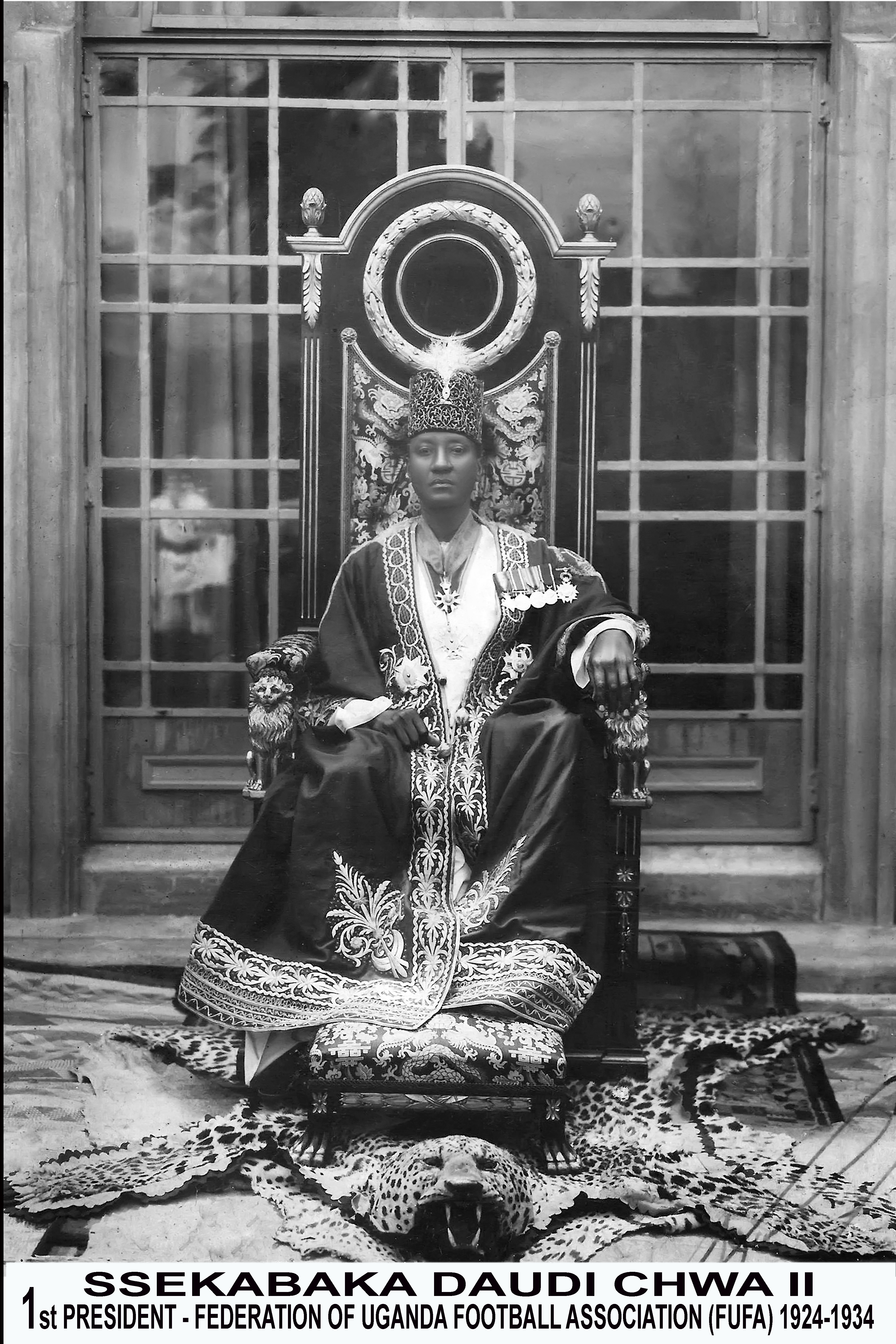
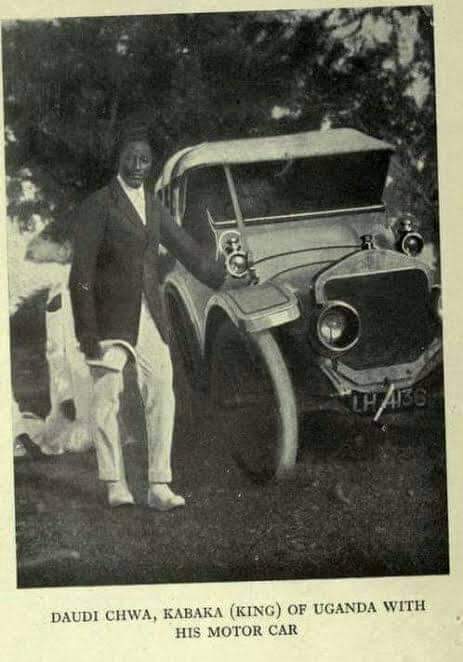
Daudi Chwa II of Buganda, who reigned from 1897 until 1939. His mother was Eveliini Kulabako.
Prince (Omulangira) Yusuufu Suuna Kiweewa, whose mother was Esiteri Nabunnya. He was born at Mengo, Uganda on 16 February 1898 and was educated at Mengo High School and King’s College Budo. Commissioned 2nd Lieutenant in October 1914. He served in the Great War from 1915 until 1919. Promoted to Lieutenant in the 7th Territorial Battalion on 25 May 1939. He served in the Second World War in Eastern Africa and in North Africa, from 1939 until 1940. Retired on 18 March 1940. He was implicated in the Buganda riots of 1949 and exiled to the Ssese Islands, where he died in 1949.
Prince (Omulangira) Tobi, whose mother was Nabisubi
Prince (Omulangira) Nayime?, whose mother was Loyiroosa Nakibuuka
Princess (Omumbejja) Najjuma Katebe, whose mother is not mentioned
Princess (Omumbejja) Anna Nambi Nassolo, whose mother was Samali Namuwanga
Princess (Omumbejja) Mboni Maliamu Kajja-Obunaku, whose mother was Nattimba. She was educated at Saint Monica’s School in Zanzibar
FIGHTING COLONIALISM
Mwanga increasingly regarded the greatest threat to his rule as coming from the Christian missionaries who had gradually penetrated Buganda. His father had played-off the three religious traditions – Catholics, Protestants, and Muslims – against each other and thus had balanced the influence of the powers that were backing each group in order to extend their reach into Africa.
Mwanga II took a much more aggressive approach, expelling missionaries and insisting that Christian converts abandon their faith or face death.
A year after becoming king he executed Yusufu Rugarama, Makko Kakumba, and Nuuwa Sserwanga, who had converted to Christianity.
On 29 October 1885, he had the incoming archbishop James Hannington assassinated on the eastern border of his kingdom.
Mwanga was determined to rid his kingdom of the new teaching and its followers.
Mwanga therefore precipitated a showdown in May 1886 by ordering converts in his court to choose between their new faith and complete obedience to his orders and follower’s.
It is believed that at least 30 Catholic and Protestant neophytes went to their deaths.Twenty-two of the men, who had converted to Catholicism, were burned alive at Namugongo in 1886 and later became known as the Uganda Martyrs.
Mwanga’s continued resistance alarmed the British, who backed a rebellion by Christian and Muslim groups who supported Mwanga’s half brother and defeated Mwanga at Mengo in 1888. Mwanga’s brother, Kiweewa Nnyonyintono, was elevated to the throne.
He lasted exactly one month and was replaced on the throne by another brother, Kabaka Kalema Muguluma. However, Mwanga escaped and negotiated with the British.
In exchange for handing over some of his sovereignty to the British East Africa Company, the British changed their backing to Mwanga, who swiftly removed Kalema from the throne in 1889.
Mwanga II did not enjoy the throne peacefully, for he was on and off it. He was driven away from the throne twice, first by Kiweewa and then by Kalema .
He, however struggled back to power again but was finally deposed on 6 July 1897, when he revolted against the Europeans.
On 27 August 1894, Mwanga had accepted for Buganda to become a Protectorate. However, on 6 July 1897 he declared war on the British and launched an attack but was defeated on 20 July 1897, in Buddu (in today’s Masaka District). He fled into German East Africa (modern-day Tanzania), where he was arrested and interned at Bukoba
He was deposed in absentia on 9 August 1897. Tenacious as he was, he escaped and returned to Buganda with a rebel army, but was again defeated on 15 January 1898.
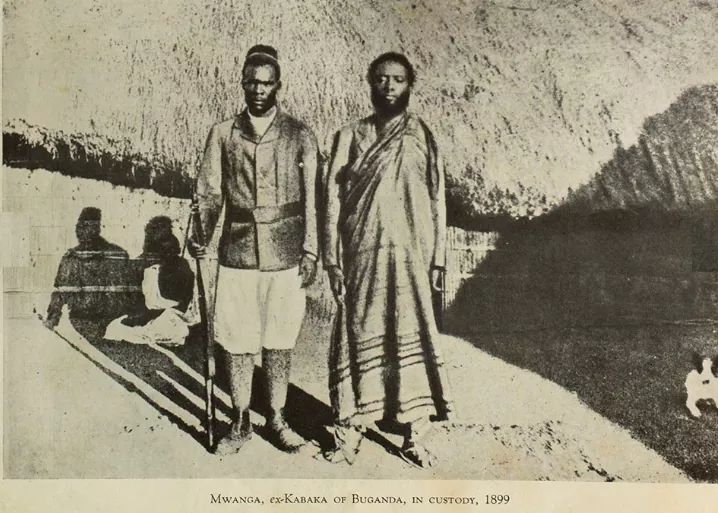
He was captured and in April 1899 was exiled to the Seychelles. While in exile, he was received into the Anglican Church and was baptized with the name of Danieri (Daniel).
He spent the rest of his life in exile. He died in the Seychelles on 8 May 1903, aged 34 or 35. On 2 August 1910, his remains were repatriated and buried at Kasubi.
32.KIWEEWA NYONYINTONO
Mutebi Nnyonyintono Kiweewa was Kabaka of the Kingdom of Buganda from 2 August 1888 until 21 October 1888. He was the 32nd Kabaka of Buganda
When he ascended the throne Kiweewa was of the view that he would be the supreme authority in the land of just as his predecessors had been.
But soon Kiweewa discovered that he was no more than a puppet in the hands of his officers and ministers.
Kiwewa should not have been counted as king because he came to the throne while the rightful heir, Mwanga II, was still alive.
Kabaka Kiweewa Nnyonyintono’s rein is the shortest in the recorded history of Buganda. He was the Kabaka-in-waiting for around six weeks; after he was crowned, he lasted a mere forty days on the throne. His reign was characterized by conflict and rebellion among the members of the royal court and intrigue and plotting among the Arabic Muslim and European Christian forces that supported the warring factions.
He was born at Nakatema prior to 1856, the eldest son of Kabaka Mukaabya Walugembe Mutesa I Kayiira, Kabaka of Buganda, who reigned between 1856 and 1884.
His mother was Kiribakka of the Mamba clan. He ascended to the throne following the defeat of his younger brother, Kabaka Mwanga II by the combined Christian, Muslim and rebel Baganda forces.
The defeat of Mwanga II occurred on 2 August 1888. Kiweewa was crowned on 11 September 1888. He maintained his capital at Mengo Hill.
He was the father of Prince Augustini Tebandeke.
He is recorded to have married twenty (20) wives:
Lady Bukirwa Nassaza
Lady Butema
Lady Kajja
Lady Lozaliya
Lady Luleba, Omusenero
Lady Namubiru
Lady Balirwa
Lady Namuli, Omufumbiro
Naabakyaala Namusoke, Kaddulubaale
Lady Nambajjwe
Lady Nambi I
Lady Nambi II
Lady Nambi III
Lady Tebalyayeebwa, Omulindamazzi
Lady Teyansigira
Lady Lwandeeta
Naabakyaala Zandaba, the Namasole, previously the Kaddulubaale
Naabakyaala Mbagumidde, the Kabejja
Lady Bwangu
Lady Sabaddu
He fathered 23 children, 21 sons and two daughters:
Prince Kiweewa Ssimbwa, whose mother was Lady Butema
Prince (Omulangira) Walulyo I, whose mother was Lady Butema
Prince (Omulangira) Kibuuka, whose mother was Lady Kajja
Prince (Omulangira) Nabadda, whose mother was Lady Lozaliya
Prince (Omulangira) Muyinda, whose mother was Lady Luleba, Omusenero
Prince (Omulangira) Agustin [Gusito] Tebandeke, whose mother was Lady Namubiru. He was educated at Namilyango College.
Prince (Omulangira) Lulaba, whose mother was Lady Namuli
Prince (Omulangira) Kagunya, whose mother was Lady Namuli
Prince (Omulangira) Lukongwa, the Ssaabalangira (Chief Prince), whose mother was Lady Namusoke
Prince (Omulangira) Kiwanuka, whose mother was Lady Namusoke
Prince (Omulangira) Walulyo II, whose mother was Lady Namusoke
Prince (Omulangira) Kalubagwiire, whose mother was Lady Nambajjwe
Prince (Omulangira) Sekamaanya, whose mother was Lady Nambi I
Prince (Omulangira) Namulinzi I, whose mother was Lady Nambi II
Prince (Omulangira) Mwanga, whose mother was Lady Nambi III
Prince (Omulangira) Chwa, whose mother was Tebalyayeebwa
Prince (Omulangira) Ngenza, whose mother was Tebalyayeebwa
Prince (Omulangira) Namulinzi II, whose mother was Teyansigira
Prince (Omulangira) Namika, whose mother was Lady Lwandeeta
Prince (Omulangira) Musisi, whose mother was Lwandeeta
Prince (Omulangira) Nasuswa, whose mother was Lady Zandaba
Princess (Omumbejja) Hana Mazzi, whose mother was Balirwa
Princess (Omumbejja) Agaati Kagere, whose mother Tebalyayeebwa
He was deposed by the Muslim forces of his brother Kabaka Kalema Muguluma, who reigned from 21 October 1888 until 5 October 1889. He was captured and thrown in jail. He was killed in prison by his Muslim captors in July 1889. He was buried at Masanafu, Kyaddondo.
33.KALEMA MUGULUMA RASHID
Rashid Kalema Muguluma was Kabaka of the Kingdom of Buganda, from 21 October 1888 until 5 October 1889. He was the 33rd Kabaka of Buganda
He is also counted among the rebel princes against their brother kings.
Kalema Muguluma was the son of Kabaka Mukaabya Walugembe Muteesa I Kayiira, Kabaka of Buganda, who reigned between 1856 and 1884. His mother was Ndibuwakanyi, of the Mamba clan. He was declared Kabaka by the Muslim forces that deposed his elder brother Kabaka Kiweewa Mutebi Nnyonyintono on 21 October 1888. He maintained his capital at Mengo Hill.
He became king in succession to his brother Kiwewa, whom he killed. He is the one who sought help from Kabalega.
He appealed to Kabalega for help and was given an army led by Rwabudongo. The army helped to put Kalema on the throne of Buganda.
Kalema spent more days on the throne than his brother Kiwewa. He ascended the throne on 12 October 1888 and was driven off on 5 October 1889. He thus spent almost a year on the throne.
When the Christian refugees allied themselves with Mwanga, in an attempt to usurp Kalema’s throne, Kalema sought to strengthen his position by purging all members of the royal family that could be lured to join the Christian cause. He decreed that all princes and princesses should be burnt alive.
About thirty princes and princesses perished in this massacre, including Mwanga’s infant sons Kyonya and Kagalo
He is recorded to have married the following wives:
Nabikukuzi, daughter of Jjumba, of the Nkima clan
Sofia Kabakalongoosa, daughter of Kinyolo, of the Nkima clan
Nakibuuka, daughter of Mugema, of the Nkima clan
Zefiria Nnampa Nakibuuka, daughter of Bakkabulindi of the Ngeye clan
Nabibooge, daughter of Kibaya, of the Nsenene clan
Veneneka Nabiwemba, daughter of Wakooli, a Musoga, of the Ngabi clan
Njera Saabaddu, daughter of Gabunga, of the Mamba clan
Kalema was also the father of Maria Kamuhanda, the Rubuga, or official sister, of Sir Daudi Chwa II.
His recorded children include:
Prince (Omulangira) Kiweewa Zzimbe, whose mother was Nabikukuzi
Prince (Omulangira) Edmond Alamanzaani Ndawula, whose mother was Zefiria Nnampa. He died on July 1, 1916
Prince (Omulangira) Yozefu Musanje Walugembe, MBE. He was born on 31 August 1889.
His mother was Nabibooge. He was educated at Namilyango College. In October 1914, he was commissioned as a 2nd Lieutenant in the African Native Medical Corps. In 1915, he was promoted to lieutenant. He served in the First World War from 1915 until 1919. He was decorated with the Member of the Order of the British Empire (MBE), the 1915 Star and the British War and Allied Victory medals. On 18 November 1907, he married Sala Kiire, daughter of Chevalier Stanislas Mugwaanya, OBE, GCSG, at the White Fathers’ Mission, Nsambya. Prince Musanje fathered three sons and two daughters: (a) Prince (Omulangira) Joseph Mukaabya (b) Prince (Omulangira) Daudi Kimera (c) Prince (Omulangira) Lodoviko Kamanya and (c) Princess (Omumbejja) Tereza Namukaabya (d) Princess (Omumbejja) Mary Kamuwanda.
Princess (Omumbejja) Yuniya Maliamu Kamuwanda, whose mother was Veneneka Nabiwemba. Princess Kamuwanda was installed as Naalinnya to Kabaka Daudi Chwa II on August 14, 1897. She received the Silver Jubilee medal in 1935, the Coronation Medal in 1937 and the Papal medal “Pro Ecclesia et Pontifice” in 1951. She died on May 30, 1951.
Princess (Omumbejja) Besemerese Hana Dimbwe. She was born in Kampala in 1887. Her mother was Sofia Kabak’alongoosa. In September 1905, she married, at Mbale, as his third wife, Semei Lwakirenzi Kakungulu, then Kabaka of Bukedi.[citation needed]
His mother was the lady Ndikubwani. His body lies in Mmende. His body was removed from Kitara to Buganda to be buried as was the custom.
After his removal from the throne by the British, Kabaka Kalema went into exile in Bunyoro. He died in exile from complications of smallpox in January 1891. At the time of his death, his age is estimated to have been in the mid-twenties. His remains were repatriated and buried at Mmende in Busiro.
34.SIR CAPTAIN H.H. DAUDI CHWA, K.C.M.G. (1897-1939)
He was born on 8 August 1896, at Mengo. He was the fifth son of Kabaka Danieri Basammula-Ekkere Mwanga II Mukasa, Kabaka of Buganda, between 1884 and 1888 and between 1889 and 1897. His mother was Abakyala Evalini Kulabako, of the Ngabi Clan, the fourth of his father’s sixteen wives.
He ascended to the throne in August 1897 following the deposition of his father by British Forces. At the time of his coronation, he was only one year old. He maintained his capital at Mengo Hill. He was educated at Kings College Budo.
He is counted among the very powerful and honorable kings of Buganda. He succeeded his father, Mwanga II, on 14 August 1897, while his father was still alive and fighting against the Europeans. His mother was the lady Everini [Evelyn] Kulabako. Daudi Chwa’s ability was very much tried by the wisdom of the Europeans.
Buganda progressed during his reign and was peaceful. His people are very rich. They have built nice and strong houses made of stone and iron roofs or tiles.
Things seem to be going well in his reign. At present, Buganda has twenty big counties with many people living in them.
He is recorded to have fathered 36 children; 20 sons and 16 daughters:
1. Eva Irini Alice Zalwango
2. Uniya Mary Namaalwa
3. Airini Dulusira Nga’nda Ndagire
4. Kasalina Nnaamukaabya Nassimbwa
5. George William Mawand
6. Kasalina Gertrude Tebattagwabwe Nnaabanaakulya
7. Margret Julian Lwantale
8. Victoria Beatrice Namikka Mpologoma Kamuwanda
9. Frederick Robert Sekamaanya Kayondo
10. Edisa Manjeri Namirembe Nabweteme
11. Edward William David Walugembe Mukaabya Kimbugwe
12. Alikizandereya Mary Balikanda Nakamaanya
13. Albert Victor Wasajja Lumansi
14. Victoria Alice Mary Nakalema Nalwoga
15. Edward Fredrick David William Muteesa Walugembe
16. Eva Irini Nacwa
17. Henry Wasswa Kalemeera
18. Alfredi Kato Kigg
19. Sepiriya Danieri Luswata
20. Richard Lumaam
21. James Sekannyo Mutebi
22. Elizabeti Nakabiri Lwamuganwa
23. Danieri Mwanga Basammula
24. Bowadisiya Nkinzi
25. Harold Kagolo Kimera
26. Ibulaimu Lincoln Ndawula
27. Jeludini Nakayenga
28. Agusiteni Tebandeke
29. Juliyani Muggale
30. Yusufu Suuna Lulambulankola
31. John Christian Lukanga
32. Onesifulo Jjuuko
33. Egbat Kamaanya
34. Mulondo
35. Alexander Ssimbwa
36. Esteri Mazzi
Some of the more notable of those children are:
Kabaka Sir Edward Frederick William David Walugembe Luwangula Mutebi Mutesa II, the 35th Kabaka of Buganda, whose mother was Lady Irene Drusilla Namaganda of the Nte (Cow) clan. He was the first President of the Republic of Uganda
Princess (Omumbejja) Victoria Beatrice Namikka Kamuwanda Mpologoma, whose mother was Abisaagi Nabunnya. Princess Mpologoma was born in Kampala, on 21 October 1920. She was installed as Naalinnya to her brother Sir Edward Muteesa II, at Kasubi in December 1953. She received the Order of the Shield and Spears.
Princess (Omumbejja) Irene Drusilla Ndagire, whose mother was Rebeka Nalunkuuma. She was born at Lubaga on 31 October 1916. She was educated at Gayaza High School and at Buloba College. She served as President of the Luganda Society, from 1953 until 1963.
Princess (Omumbejja) Alice Evelyn Zaalwango, whose mother was Miriya Nalule. She was born on 6 December 1915. She was installed as Naalinnya to her brother, Sir Edward Muteesa II, at Kasubi in November 1939. She died of shock on hearing that the British had exiled the Kabaka on 30 November 1953. She was awarded the medal of Order of the Shield and Spears.
Princess (Omumbejja) Margaret Juliana Lwantale, whose mother was Irene Namaganda. She was born in Kampala on 13 June 1920. She was installed as Nassolo to her brother Sir Edward Muteesa II, at Kasubi.
Prince (Omulangira) Alexander David Ssimbwa, whose mother was Erina Nambawa. He was born in Kampala on 21 March 1934. He was arrested, imprisoned and tortured by troops loyal to Obote, following his coup d’état in 1966. Prince Ssimbwa was sentenced to 64 years imprisonment for allegedly plotting Obote’s assassination. Joined the liberation struggle led by Yoweri Museveni.
He died at his palace at Salaama, a suburb of Kampala, on 22 November 1939 at the age of 43 years. He was buried at Kasubi Nabulagala, the third Kabaka to be buried there.
35.MUTEESA II, EDWARD, S.M. LUWANGULA
Sir Edward Frederick William David Walugembe Mutebi Luwangula Mutesa II (19 November 1924 – 21 November 1969) was Kabaka of the Kingdom of Buganda in Uganda from 22 November 1939 until his death. He was the thirty-fifth Kabaka of Buganda[1] and the first president of Uganda.[2] The foreign press often referred to him as King Freddie, a name rarely used in Uganda.[3][4]
Mutesa was born at the house of Albert Ruskin Cook in Makindye, Kampala, on 19 November 1924, the fifth son of the Kabaka Daudi Cwa II, who reigned between 1897 and 1939.[5] His mother was Lady Irene Drusilla Namaganda, of the Nte clan. He was educated at King’s College Budo, a prestigious school in Uganda.[5]
Upon the death of his father on 22 November 1939, he was elected Kabaka by the Lukiiko at the age of 15 and was installed outside the Lubiri at Mengo on 25 November 1939.[6] He reigned under a Council of Regents until he came of age and assumed full powers.
Mutesa II was crowned as Kabaka at Buddo on 19 November 1942, his eighteenth birthday. At that time, Buganda was still part of the Uganda Protectorate, a territory within the British Empire.
The years between 1945 and 1950 saw widespread protests against both the Governor of Uganda’s and Kabaka Mutesa’s governments.
In the early 1950s the British Government floated the idea of uniting British East Africa (Uganda, Kenya and Tanganyika) into a federation. Africans feared that this would lead to their coming under the control of Kenya’s white settler community, as had happened in the Federation of Rhodesia and Nyasaland. The Baganda, fearing they would lose the limited autonomy they had under British rule, were particularly opposed. Mutesa himself opposed the proposal, and thus came into conflict with the British Governor, Sir Andrew Cohen, prompting the Kabaka crisis. In 1953, the Lukiiko (Parliament) of Buganda sought independence from the Uganda Protectorate, with Mutesa himself demanding that Buganda be separated from the rest of the protectorate of Uganda and transferred to Foreign Office jurisdiction. Governor Cohen’s response was to depose and exile the Kabaka on 30 November, creating massive protests among the Baganda.[8] Mutesa’s forced departure made him a martyr in the eyes of the Baganda, whose latent separatism set off a storm of protest. Cohen could find no one among the Baganda willing and able to mobilise support for his schemes. After two years of unrelenting Ganda hostility and obstruction, Cohen was forced to reinstate ‘Kabaka Freddie’, who returned to Kampala on 17 October 1955 under a negotiated settlement which made him a constitutional monarch and gave the Baganda the right to elect representatives to the kingdom’s parliament, the Lukiiko. Mutesa’s standing up to Cohen greatly boosted his popularity in the kingdom.[9]
In 1962, Uganda became independent from Britain under the leadership of Milton Obote. Under the country’s new constitution, the Kingdom of Buganda became a semi-autonomous part of a new Ugandan federation. The federal Prime Minister was Obote, the leader of the Uganda People’s Congress (UPC), which entered a governing coalition with the dominant Buganda regional party, Kabaka Yekka. The post of Governor-General of Uganda was abolished with the attainment of republican status and replaced by a non-executive President.
Obote and the UPC reached a deal with Mutesa to support his election to the Presidency of Uganda. In a session of Parliament on 4 October 1963, Mutesa was elected President via secret ballot with the support of over two thirds of the members.
In 1964, the coalition between Mutesa and Obote’s parties collapsed over the imposition, against Mutesa’s will, of a referendum to decide the fate of two “lost counties”. Residents of the two counties voted overwhelmingly in favour of their return from Buganda to Bunyoro. In 1966, Mutesa’s estrangement from Obote merged with another crisis. Obote faced a possible removal from office by factional infighting within his own party.
He had the other four leading members of his party arrested and detained, and then suspended the federal constitution and declared himself President of Uganda in February 1966, deposing Mutesa.
The Buganda regional Parliament passed a resolution in May 1966 declaring that de jure Buganda’s incorporation into Uganda had ended with the suspension of the constitution and requesting the federal government to vacate the capital city, which was in Buganda. Obote responded with an armed attack upon the Kabaka’s palace, sending Mutesa into exile in the United Kingdom via Burundi, and in 1967 a new constitution abolished all of Uganda’s kingdoms, including Buganda.
Mutesa died of alcohol poisoning in his London flat, No. 28 Orchard House in Rotherhithe, in 1969. Identified by the Metropolitan Police as suicide, the death has been viewed as assassination by those who claim Mutesa may have been force-fed vodka by agents of the Obote regime.
Mutesa was interviewed in his flat only a few hours before his death by the British journalist John Simpson, who found that he was sober and in good spirits. Simpson reported this to the police the following day on hearing of Mutesa’s death, but this line of inquiry was not pursued.[citation needed]
After Mutesa’s body had been embalmed by Desmond Henley,it was returned to Uganda in 1971 after the overthrow of Obote and given a state funeral at Kasubi Nabulagala.
The president who ordered the state funeral was Idi Amin, who as army commander had led the assault on Mutesa’s palace in 1966.
Mutesa married Lady Damali in 1948. He is said to have fathered many children with her and twelve other women:
Nnaabakyala Damali Catherine Nnakawombe, the Nnabagereka, daughter of Christopher Kisosonkole of the Nkima clan. Wedding on 19 November 1948 at St. Paul’s Cathedral Namirembe.
Lady Edith Kasozi
Omubiitokati (Princess) Beatrice Kabasweka, a Mutoro from Toro.
Lady Kate Ndagire. Married in 1950
Nnaabakyala Sarah Nalule, Omuzaana Kabejja, sister of the Nnabagereka, and daughter of Christopher Kisosonkole of the Nkima clan. Married in 1954.
Lady Nalwooga. She died in 2003.
Lady Nesta M. Rugumayo, a Mutoro, from Toro
Lady Kaakako Rwanchwende, a Munyankole princess from Ankole.
Lady Winifred Keihangwe, a Munyankole princess from Ankole. She was imprisoned by Milton Obote and released only shortly before going into labour, in 1966.
Lady Zibiah Wangari Ngatho, a Kikuyu, from Nairobi, Kenya.[17]
Lady Catherine Karungu, a Munyankole princess from Ankole
Lady Naome Nanyonga, of Nsenene clan from Masaka Buddu. Naome Nanyonga was a midwife and is the founder of Sunga Maternity Hospital. She died in 2006.
Lady Margaret Nakato of Nkumba, Busiro County.
Mutesa is recorded to have fathered at least 14 sons and 9 daughters:[18]
Prince Kiweewa Luswata. The first son of Kabaka Muteesa II. He was born in Wakiso. He lived and studied in France. He died in the early 1990s and was buried at Kasubi Tombs, Nabulagala.
Prince Robert Masamba Kimera, whose mother was Nesta M. Rugumayo. He was born in Kampala in 1950. He was educated at St. Mary’s College Kisubi and King’s College Budo and in Canada. He worked as a geologist with the Swaziland Department of Geology between 1980 and 1983. He was a lecturer at the Nakawa Vocational School from 1991 until 1992. In 1993, he settled in Canada.
Prince (Omulangira) David Francis Ssuuna Kayima Ssezzibwa. Was born in Kitovu Masaka. His mother was Muzaana Mary Nabweteme of the Lungfish (Mmamba) clan. He was a teacher and a psychologist. Died in Denmark and was interred in Bugembegembe royal tombs in Wakiso.
Kabaka Ronald Muwenda Mutebi II, whose mother was Sarah Nalule.
Prince (Omulangira) Ssuuna Frederick Wampamba, whose mother was Edith Kasozi. He was a commissioned 2nd lieutenant in the Uganda Army. He was killed on the orders of Idi Amin at Bombo in 1972. He is buried at the Kasubi Tombs in Nabulagala.
Prince (Omulangira) Henry Kalemeera, whose mother was Damali Nnakawombe. He was educated at King’s College, Buddo and Addis Ababa University, Ethiopia. He is an aeronautical engineer. He settled in the United States. Worked or still works as a flight engineer with American Airlines.
Prince (Omulangira) George Michael Ndawula, whose mother was Muzaana Nalwoga.
Prince (Omulangira) Joseph Ndawula, Whose mother was Muzaana Nzera Nabakooza. He has worked with the foreign services and still serves as Uganda’s High Commissioner to Namibia
Prince (Omulangira) Richard Walugembe Bamweyana, whose mother was Sarah Nalule. He was born in 1956, educated at Achimota School, Ghana, and worked in the fashion and advertising industries. He died in the 2000s. He was buried at Kasubi Tombs in Nabulagala.
Prince (Omulangira) Katabaazi Mukarukidi, whose mother was Damali Nnakawombe. He is an airline pilot in Nigeria.
Prince (Omulangira) Patrick Nakibinge, whose mother was Sarah Nalule. He died in the 2000s and is buried at Kasubi Tombs in Nabulagala.
Prince (Omulangira) Daudi Golooba. He was educated at King’s College Budo and Makerere University. He is an accountant. He is a founding member and chairman of the Buganda Heritage Association of the United Kingdom (UK) and Ireland (founded in 1998). He settled in the UK.
Prince (Omulangira) Herbert Kateregga, whose mother was Kaakako Rwanchwende. He settled in the UK.
Prince (Omulangira) Fredrick Mawanda Mutebi. He was born in 1965 to Muzaana Specioza Namagembe. He died and was interred in Bugembegembe royal tombs in Wakiso district.
Prince (Omulangira) Daudi Kintu Wasajja, whose mother was Winifred Keihangwe. He was born in Kampala in May 1966, after his father had left Uganda. He was educated at the University of Nottingham in the UK, graduating with a Bachelor of Arts. He worked as an executive underwriter for Pan World Insurance Company and as a regional retail manager for Celtel (Uganda) Limited (now Airtel Uganda Limited). He is a member of Buganda Land Board, Kabira Country Club, Hash Harriers Athletic Club, and others. Lives in Kampala.
Princess (Omumbejja) Dorothy Kabonesa Naamukaabya Nassolo, whose mother was Damali Nakawombe. She was born at the Mengo Palace in 1951. She is a graduate of the University of Nairobi. Lives in Kampala.
Princess (Omumbejja) Dina Kigga Mukarukidi, whose mother was Beatrice Kabasweka. She works at the headquarters of the African Union in Addis Ababa, Ethiopia.
Princess (Omumbejja) Anne Sarah Kagere Nandawula, whose mother is Kate Ndagire. Born at Mengo in 1951.
Princess (Omumbejja) Catherine Agnes Nabaloga, whose mother was Kate Ndagire. She was installed as the Lubuga at the coronation of her brother Kabaka Ronald Muwenda Mutebi II, the thirty-sixth Kabaka of Buganda, who has reigned since 1993. Princess Nabaloga is the patron of Buganda Heritage Association in Denmark, founded in 1998. She holds a Doctor of Philosophy degree in linguistics.
Princess (Omumbejja) Alice Mpologoma Zaalwango, whose mother was Edith Kasozi. She was born in 1961. She was educated at Gayaza Junior School, Kibuli High School, and Makerere University. She died in Pretoria, South Africa from breast cancer on 23 March 2005. She is buried at Kasubi.
Princess (Omumbejja) Stella Alexandria Sserwamutanda Ndagire. Born in Nairobi, Kenya. Her mother was Zibiah Wangari Ngatho, a Kikuyu.[17] She was raised in Kampala and Nairobi. Settled in Atlanta, Georgia, U.S.
Princess (Omumbejja) Jane Mpologoma Nabanakulya. Born in Sunga Village, Buyaga County, Bunyoro-Kitara Kingdom, on 12 April 1964. Omuzaana Naome Nanyonga was her mother. In 2003, she moved to London, England, where she lives with her husband David Segawa Mukasa.
Princess (Omumbejja) Gertrude Christine Naabanaakulya Tebattagwabwe. Was born at Mengo Hospital on 20 August 1964. Her mother is Margaret Nakato of Nkumba, Busiro County. Grew up in Uganda until the age of nine, when she relocated to London, England. Studied to become an accountant. Moved back to Uganda in May 2013.
Diana Balizzamuggale Teyeggala. She is the youngest child. She was born in Kampala in October 1966, after her father had gone into exile. Her mother is Catherine Karungu, an Ankole princess. Teyeggala never saw her father alive. She resides in Kampala.
 OLULYO OLULANGIRA ONLINE